NOTICE: Please make an appointment via WhatsApp or call the office before walking in. We respond during working hours.
Menu
iPhone Service Malaysia
201303050224
Can Data Be Recovered from an iPhone with a Broken Motherboard?
Yes, data recovery may still be possible even when an iPhone motherboard is severely damaged or physically broken. However, the result depends on whether the original components required to access the encrypted data are still functional.
Simply replacing the damaged motherboard with another one will not recover the original data. The customer’s data is stored on the original NAND flash memory and protected by Apple’s hardware-based encryption, which relies on the original CPU and other paired components.
When the original motherboard is too badly damaged for a practical board-level repair, one possible data recovery method is to transfer the required original components to a compatible donor motherboard. The donor board provides a working platform, while the customer’s original components are retained to regain access to the encrypted data.
In this real case, the iPhone was severely bent and its motherboard had physically broken into two pieces. Before attempting any transplant, we first had to inspect the original CPU, NAND and other critical components to determine whether data recovery was still technically possible.
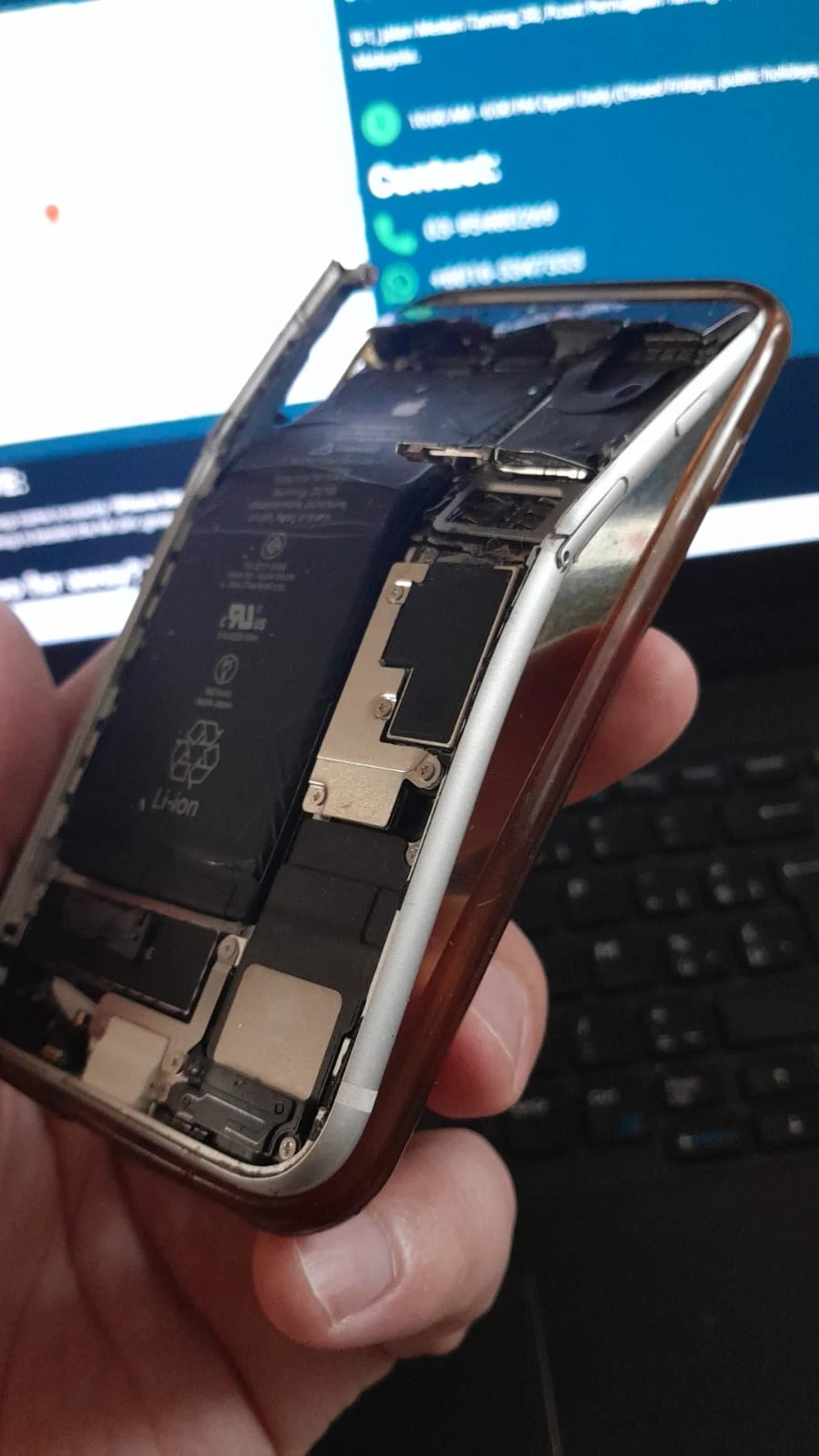
The customer’s iPhone was severely bent, raising concern about damage to the logic board and whether the original data could still be recovered.
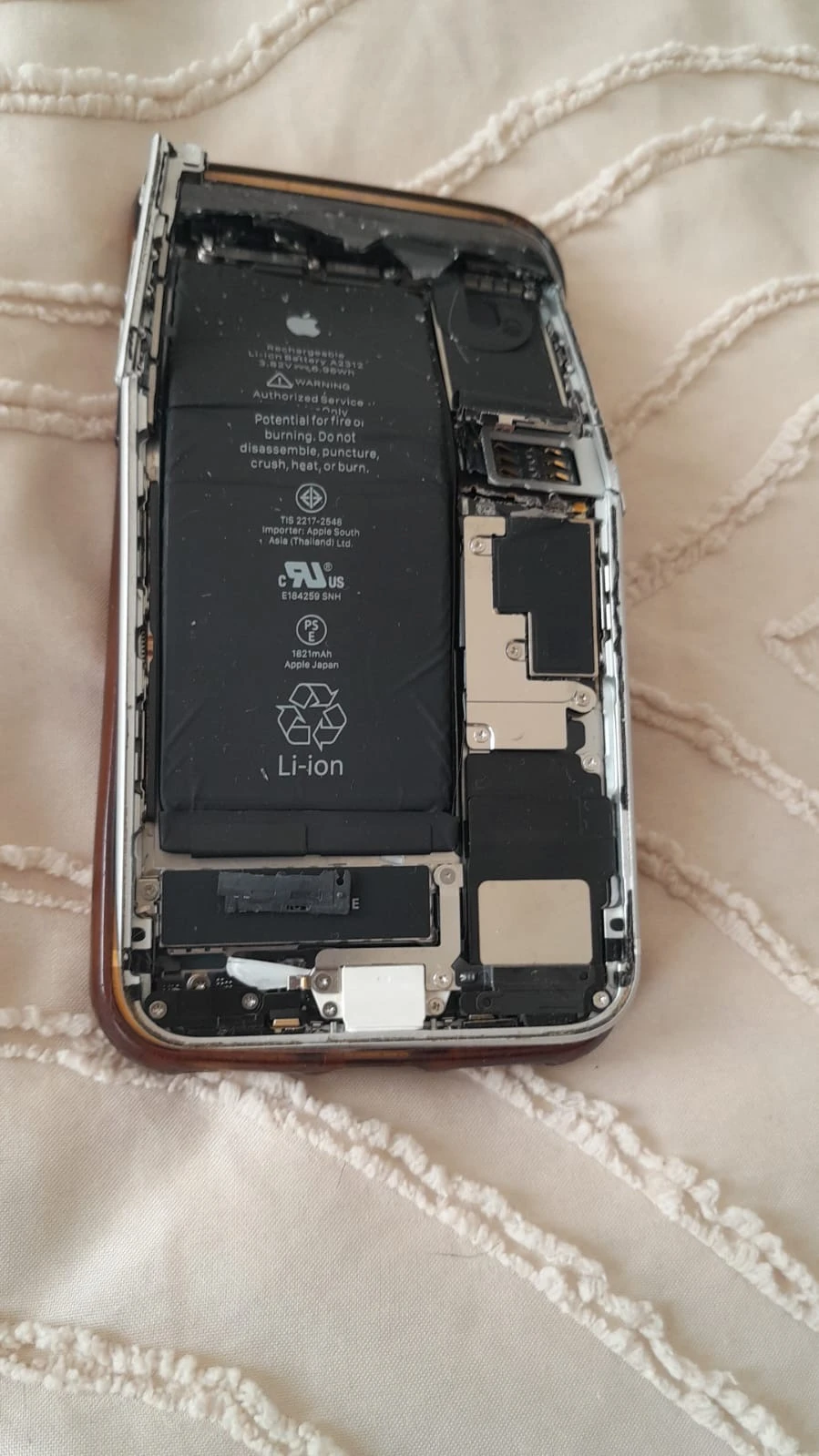
Another view of the device shows how extensively the iPhone chassis had been bent.
Table of Contents
Can Data Still Be Recovered If the iPhone Motherboard Is Broken?
Yes, in most cases. A broken motherboard does not automatically mean the data is lost.
The important question is not whether the motherboard can still be used in its original condition, but whether the critical original components required to access the encrypted data are still functional.
For severe physical damage, the first step is diagnosis. We need to inspect the original CPU, NAND flash memory and other required components before deciding whether repairing the original motherboard is practical or whether a donor-board transplant should be considered.
For this type of data recovery, the original CPU and NAND are critical. If either the CPU or NAND is physically damaged and no longer functional, we do not have a method to recover the data.
This is why we cannot determine whether data recovery is possible simply by looking at how badly damaged the iPhone is from the outside. The motherboard must first be inspected to determine whether these critical original components have survived.
Why Replacing the iPhone Motherboard Will Not Recover Your Data
Replacing a damaged iPhone motherboard with another working motherboard may make the phone usable again, but it will not bring back the data stored on the original device.
Your photos, videos, messages and other files are stored on the original NAND flash memory. However, simply moving the NAND to another motherboard is also not enough because iPhone data is hardware-encrypted and tied to the original CPU and other paired components.
For data recovery, we therefore need to preserve the required original components that allow the encrypted data to be accessed.
In severe cases where the original motherboard itself is too badly damaged to repair, a compatible donor motherboard can be used as a working platform. The donor board does not contain or recover the customer’s data. It provides a functional motherboard onto which the required original components can be transplanted.
When Is a Donor Motherboard Transplant Needed for Data Recovery?
Whenever possible, repairing the original motherboard is normally the preferred approach for data recovery. It avoids unnecessarily removing critical components such as the CPU and NAND.
Even when a motherboard is severely damaged, a transplant is not always necessary. For example, in our water-damaged iPhone data recovery case, the original motherboard had extensive corrosion and damaged circuits, but we were still able to repair the original board and recover the data without performing a donor-board transplant.
However, severe physical damage can sometimes make the original motherboard impractical to repair. The board may be badly bent, cracked, broken into sections, or have extensive damage to its internal layers and connections.
In these situations, a compatible donor motherboard can provide a functional replacement platform. The required original components are carefully removed from the damaged motherboard and transferred to the donor board.
Before attempting this process, we first need to determine whether the important original components have survived the physical damage. A donor-board transplant only becomes an option after the condition of these components has been assessed.
Real Case: An iPhone Motherboard Broken Into Two Pieces
This case involved an iPhone SE (2nd generation) that had suffered extreme physical damage. The phone was severely bent, and the force was strong enough to physically break the motherboard into two pieces.
The customer’s priority was not to repair the iPhone for continued use. The objective was to recover the data stored on the device.
The customer contacted us specifically for data recovery rather than restoration of the damaged device.
Initial Condition of the iPhone
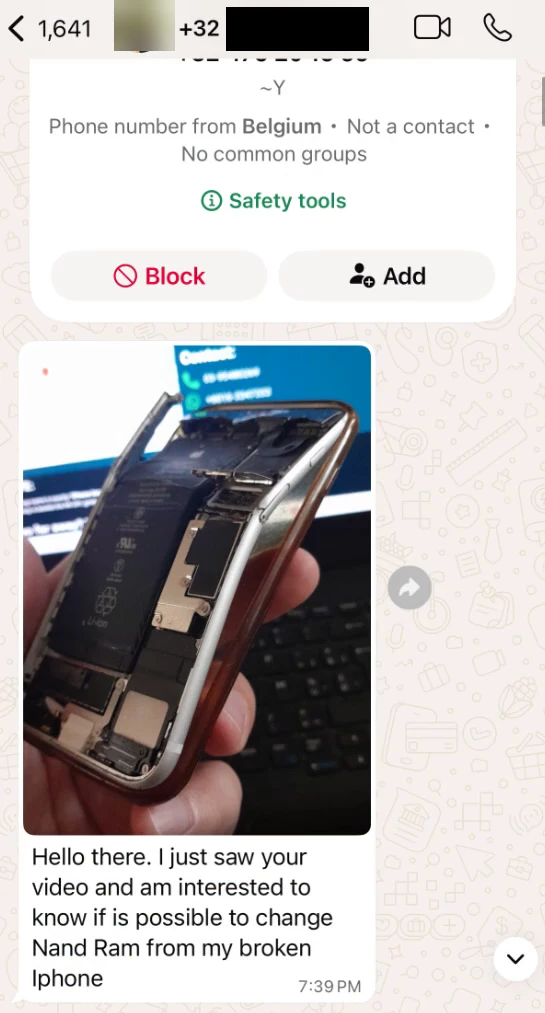
Before sending the device to us, the customer provided photos showing how badly the iPhone had been damaged. After the screen and battery were removed, the extent of the damage around the motherboard became much clearer.
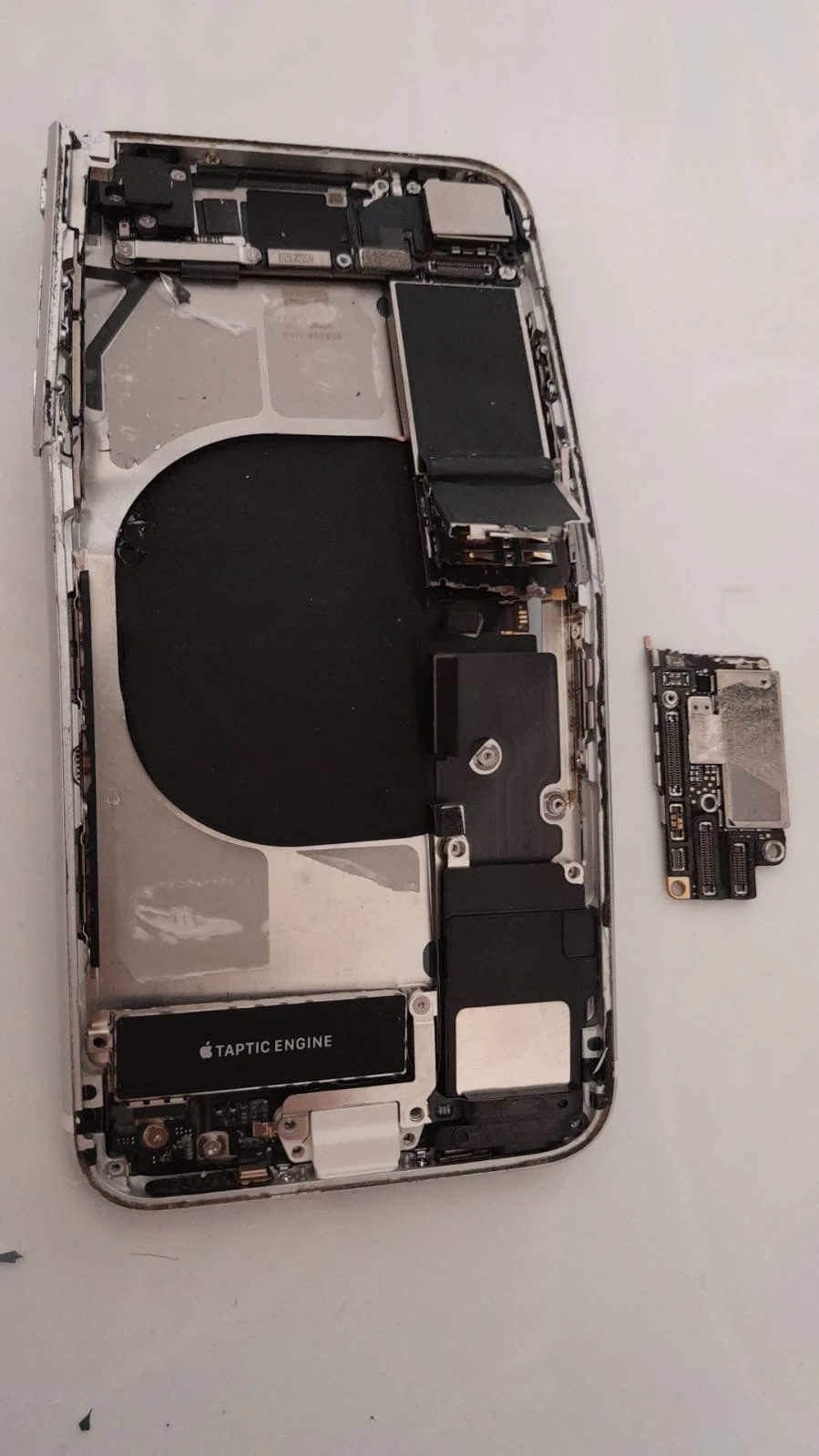
Eventually, the motherboard was removed from the housing and could be seen physically separated into two sections.
At this point, repairing the broken motherboard based on its original PCB was unlikely to be practical. However, the condition of the motherboard itself did not yet tell us whether the customer’s data could be recovered.
The next question was much more important: had the critical original components survived the damage?
With the display and battery removed, the extent of the physical damage around the motherboard could be examined more closely.
Why We Could Not Judge the Success Rate from Photos
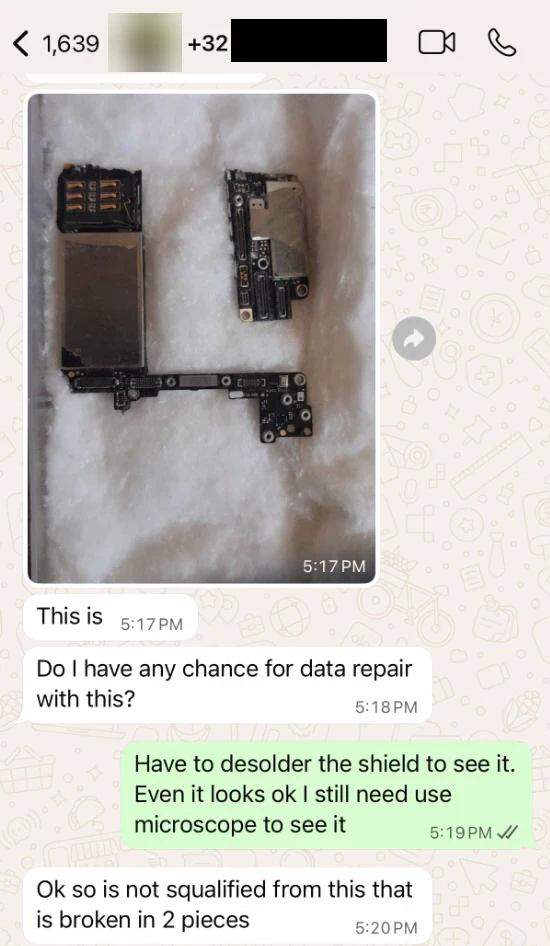
The customer later sent us a photo showing that the motherboard had been removed and was physically broken into two pieces.
From the photo, the motherboard was clearly broken into two sections. However, the condition of the critical components could not be determined without removing the shields and performing a microscope inspection.
Although the damage looked severe, a photo was still not enough for us to determine whether the data could be recovered. The external condition of the motherboard does not tell us whether the CPU, NAND and other critical components are still functional.
We explained to the customer that the shielding needed to be removed and the board inspected under a microscope before we could properly assess the condition.
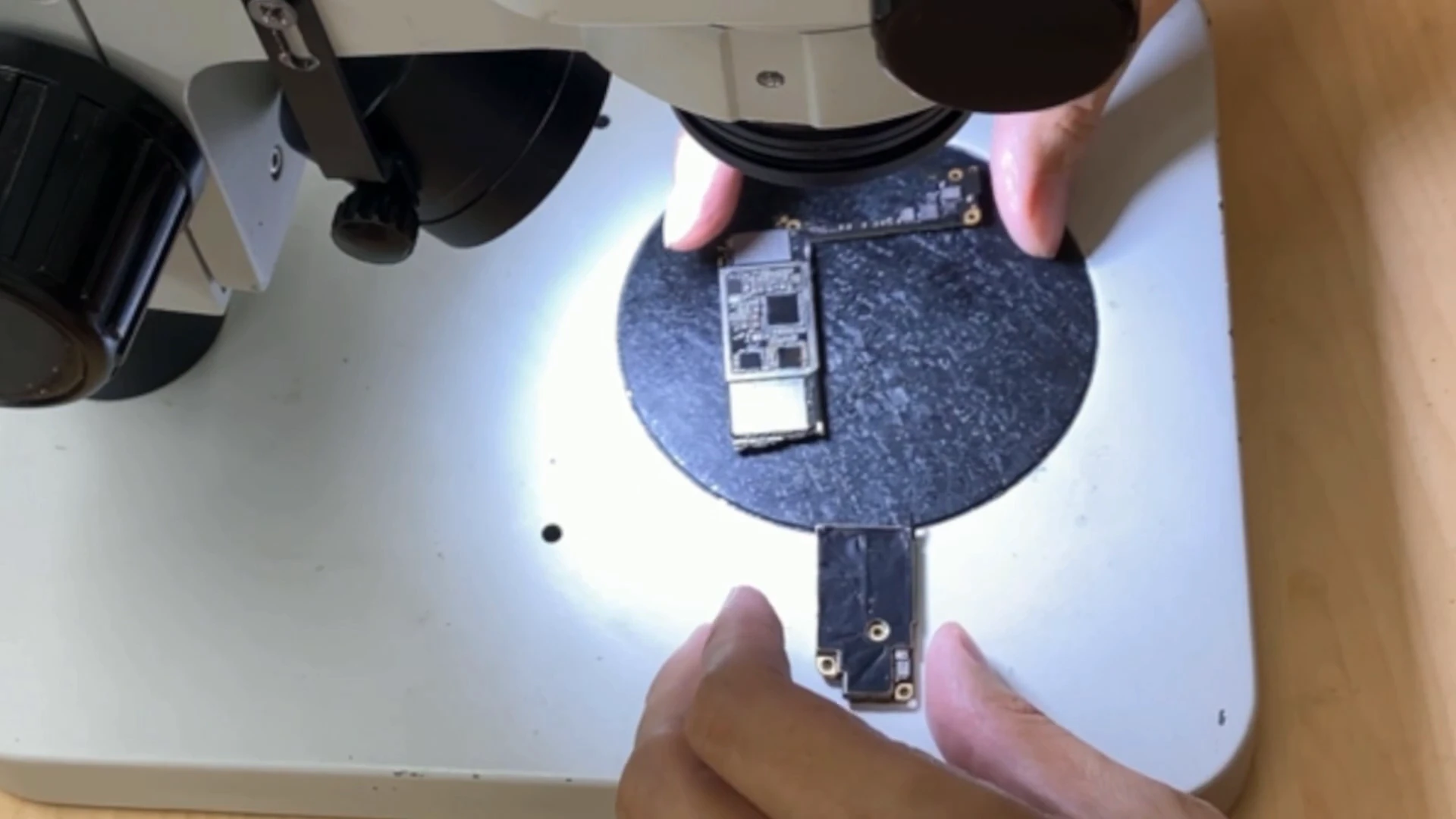
After receiving the device, we could inspect the broken motherboard directly and begin assessing whether data recovery was technically possible.
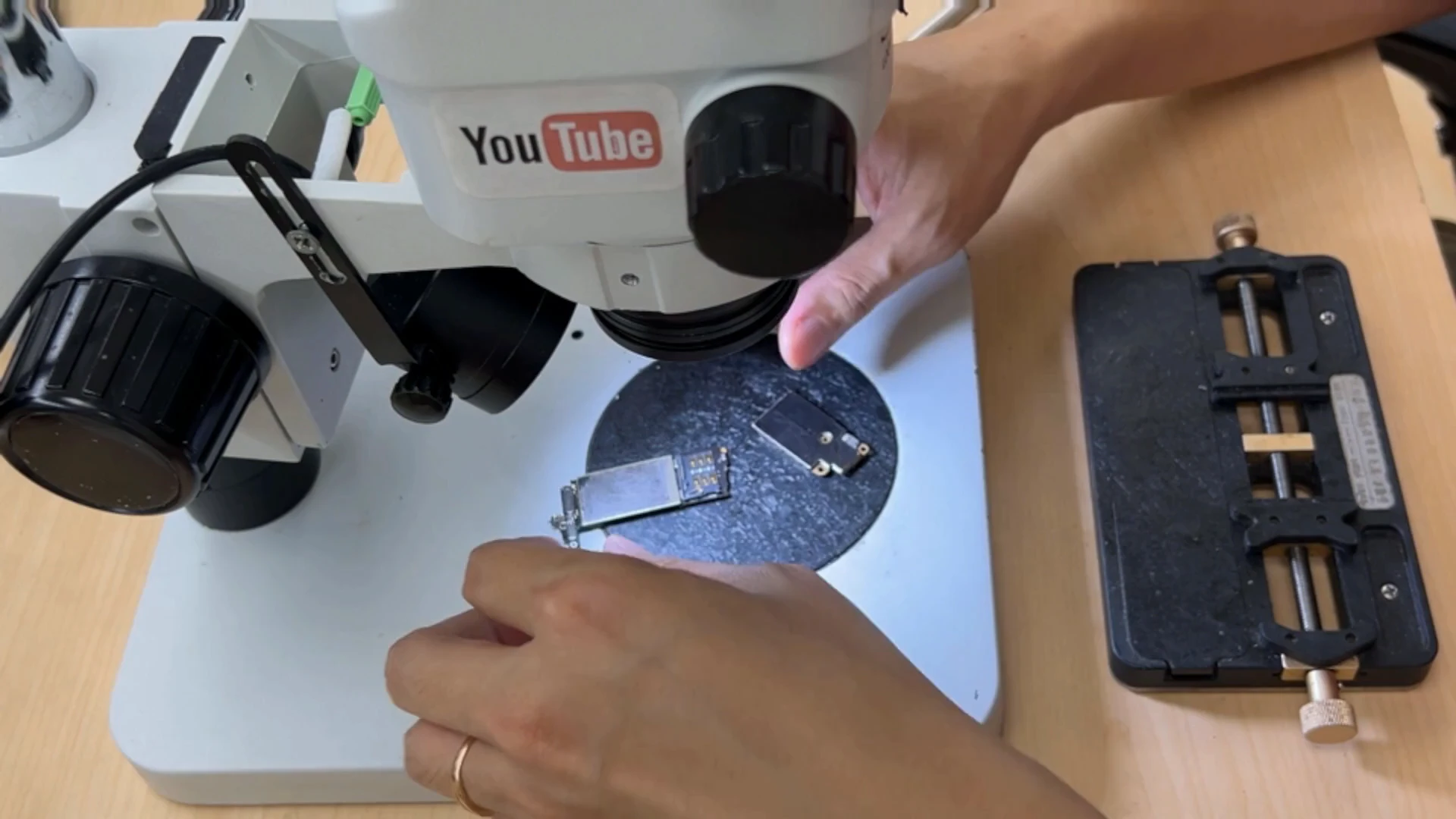
The opposite side of the motherboard shows additional physical damage caused when the device was bent and broken.
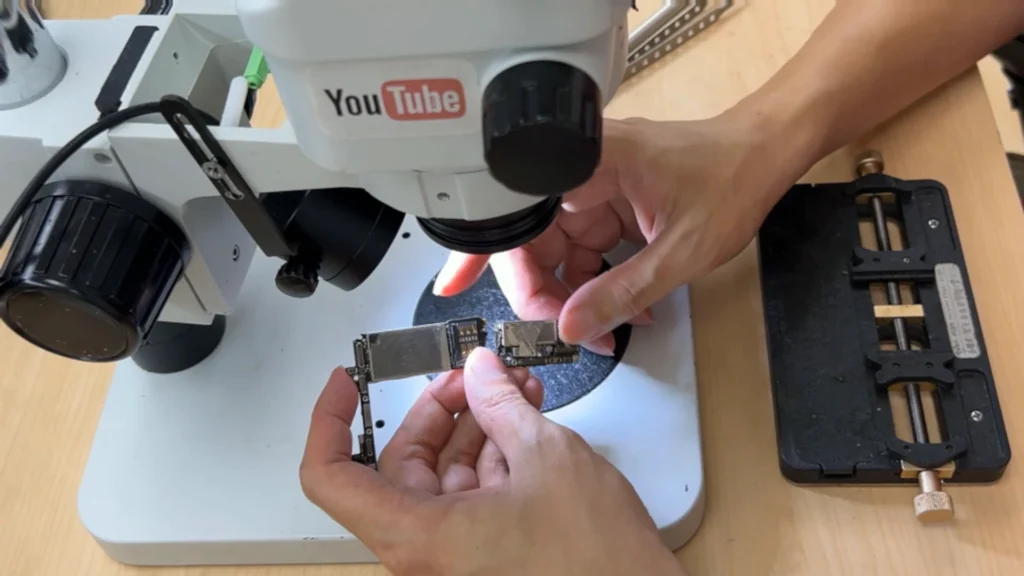
Once we received the motherboard, we could examine the broken sections directly. The next step was to inspect the critical original components individually and determine whether a donor-board transplant was worth attempting.
A closer inspection shows the extent of the physical motherboard damage before component-level diagnosis began.
Inspecting the Original Components Before the Transplant
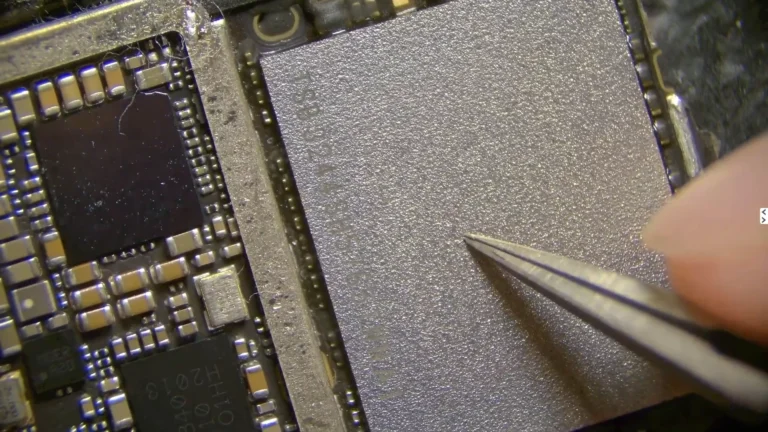
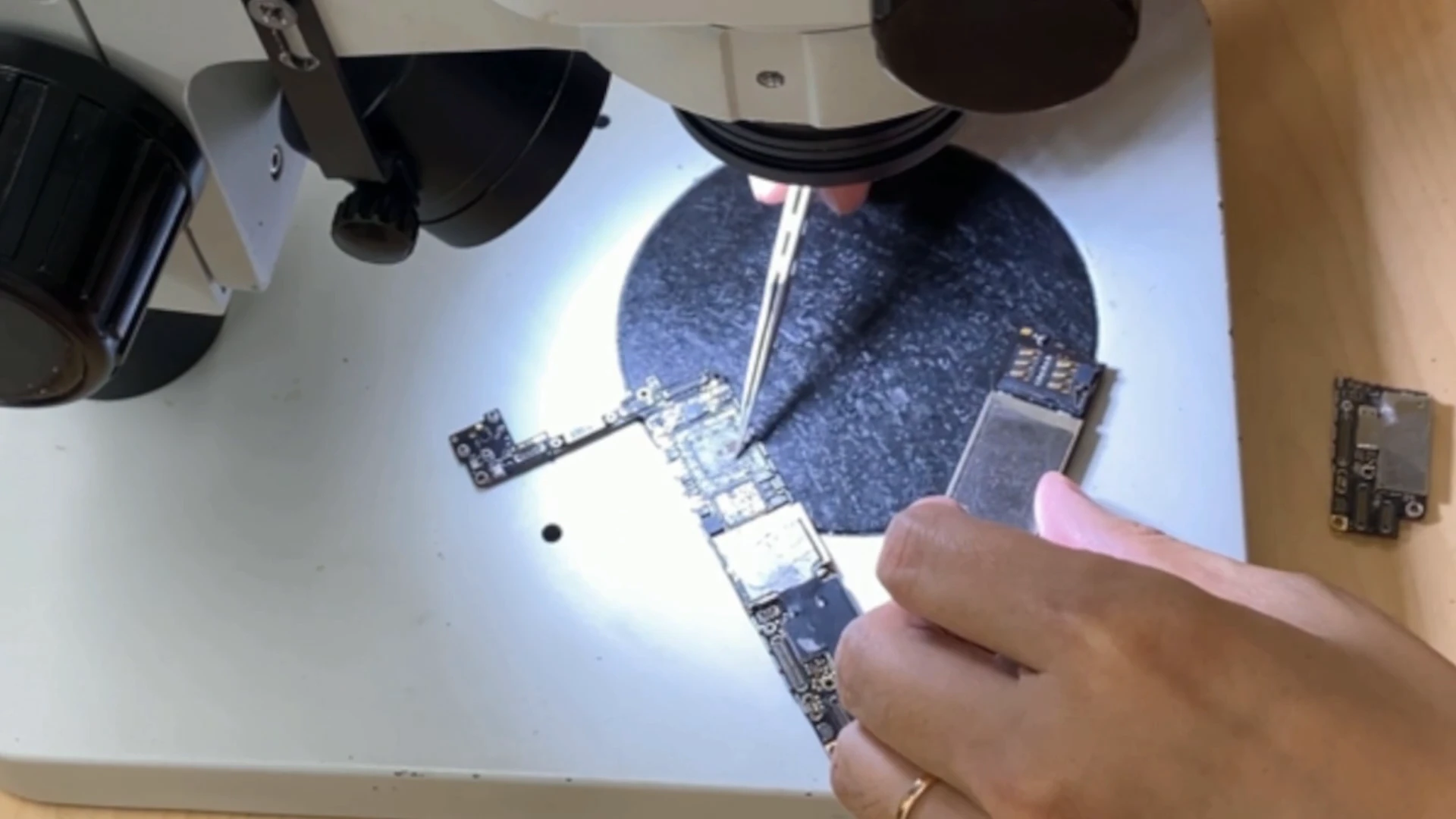
Before removing any critical components, we first inspected the original motherboard under a microscope.
For this type of data recovery, the condition of the original CPU and NAND is especially important. If either component has been physically damaged and is no longer functional, we do not have a method to recover the data.
The purpose of this initial inspection was therefore to look for visible cracks, impact damage or other physical damage to the critical components before taking the additional risks involved in removing and transplanting them.
Checking the NAND Flash Memory
The NAND flash memory was one of the first critical components inspected. Externally, it appeared physically intact despite the severe motherboard damage.
We first inspected the original NAND flash memory under the microscope. Despite the severe physical damage to the motherboard around it, the NAND itself showed no obvious cracks or visible physical damage.
This did not yet prove that the NAND was fully functional, but visually there was no immediate reason to stop the recovery attempt.
Checking the Logic EEPROM
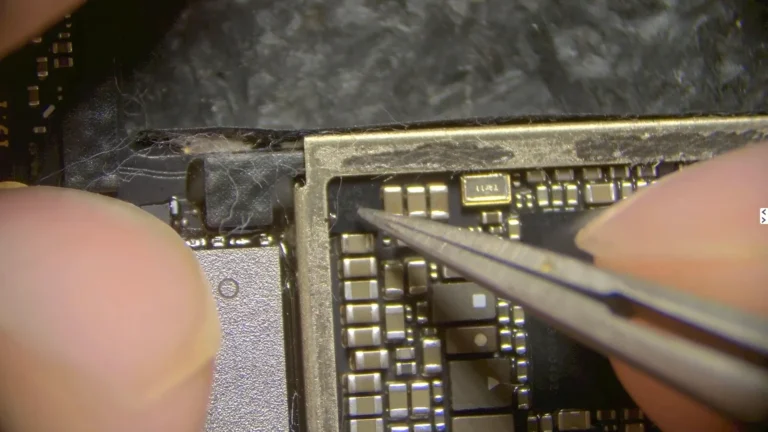
The logic EEPROM was another original component inspected before deciding whether a donor-board transplant could be attempted.
The logic EEPROM was also inspected for visible physical damage. It appeared intact under the microscope and could potentially be transferred if we proceeded with the donor motherboard.
The logic EEPROM contains important device-specific information and is one of the components that must be considered during this type of motherboard transplant.
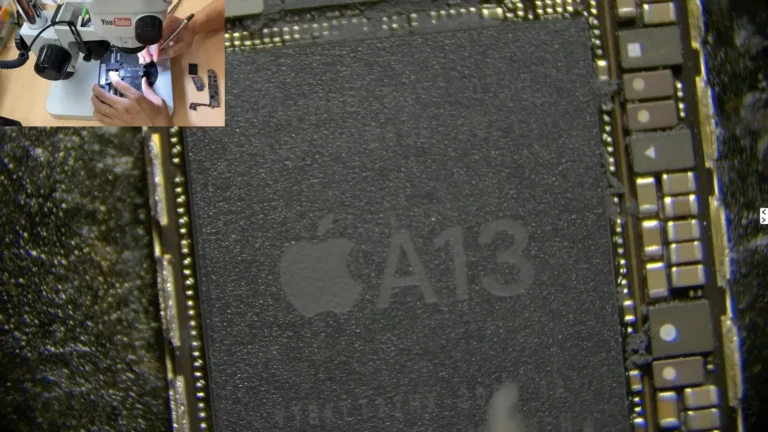
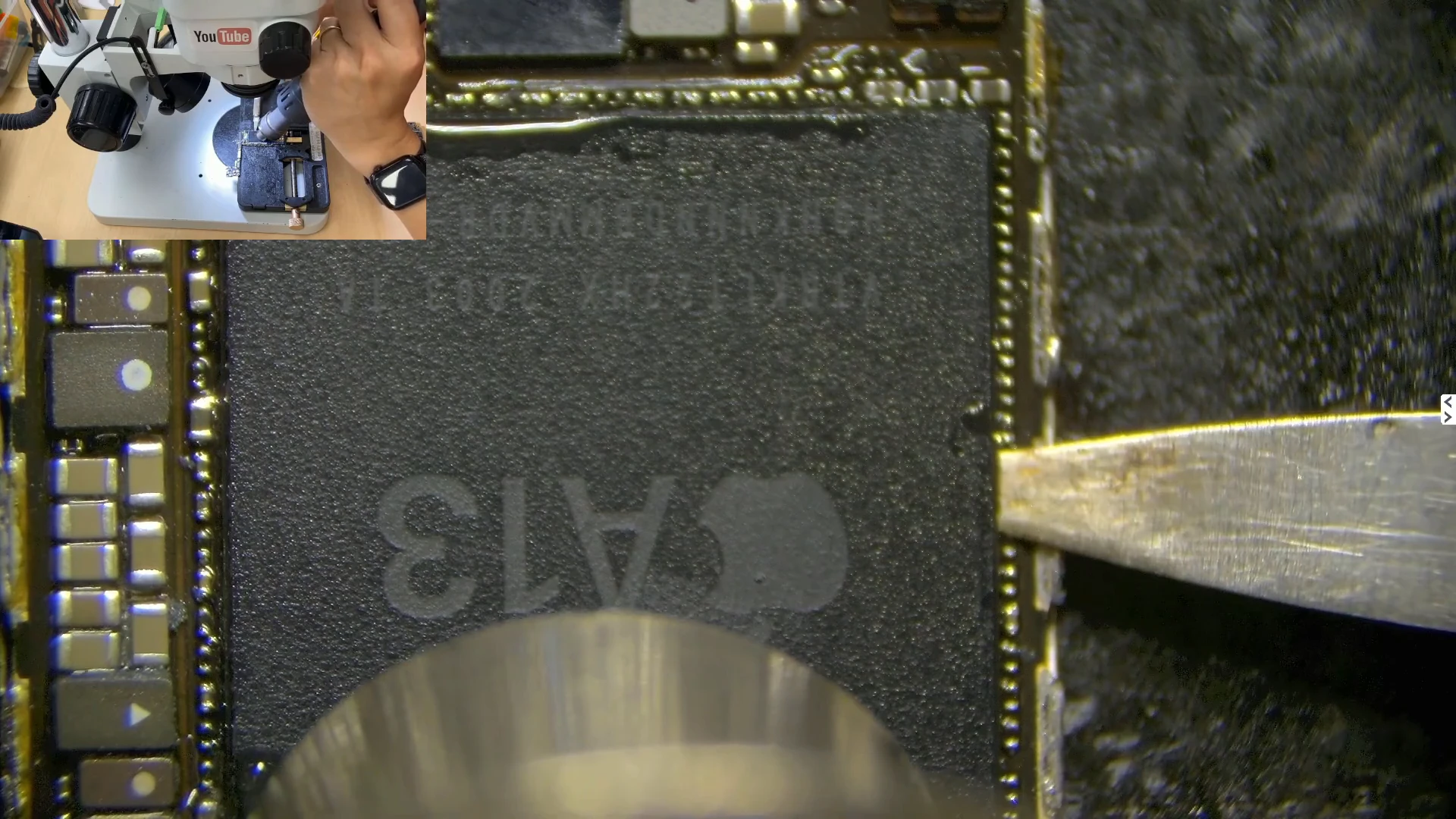
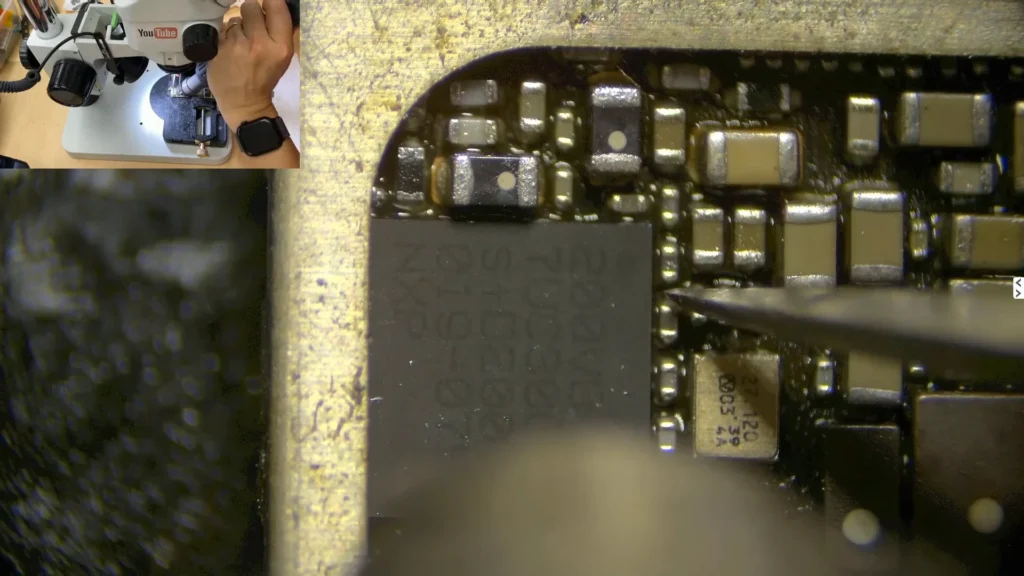
The original CPU was inspected under a microscope for cracks and other visible damage. No obvious physical damage was found at this stage.
Finally, we carefully inspected the original CPU. We looked for cracks and other visible signs of physical damage caused when the motherboard was bent and broken.
The CPU appeared physically intact under the microscope.
With no obvious physical damage found on these critical components, we had enough reason to proceed to the next stage. The next step was to transfer the original CPU to a compatible donor motherboard and test whether it could still function.
Transferring the Original CPU to a Donor Motherboard
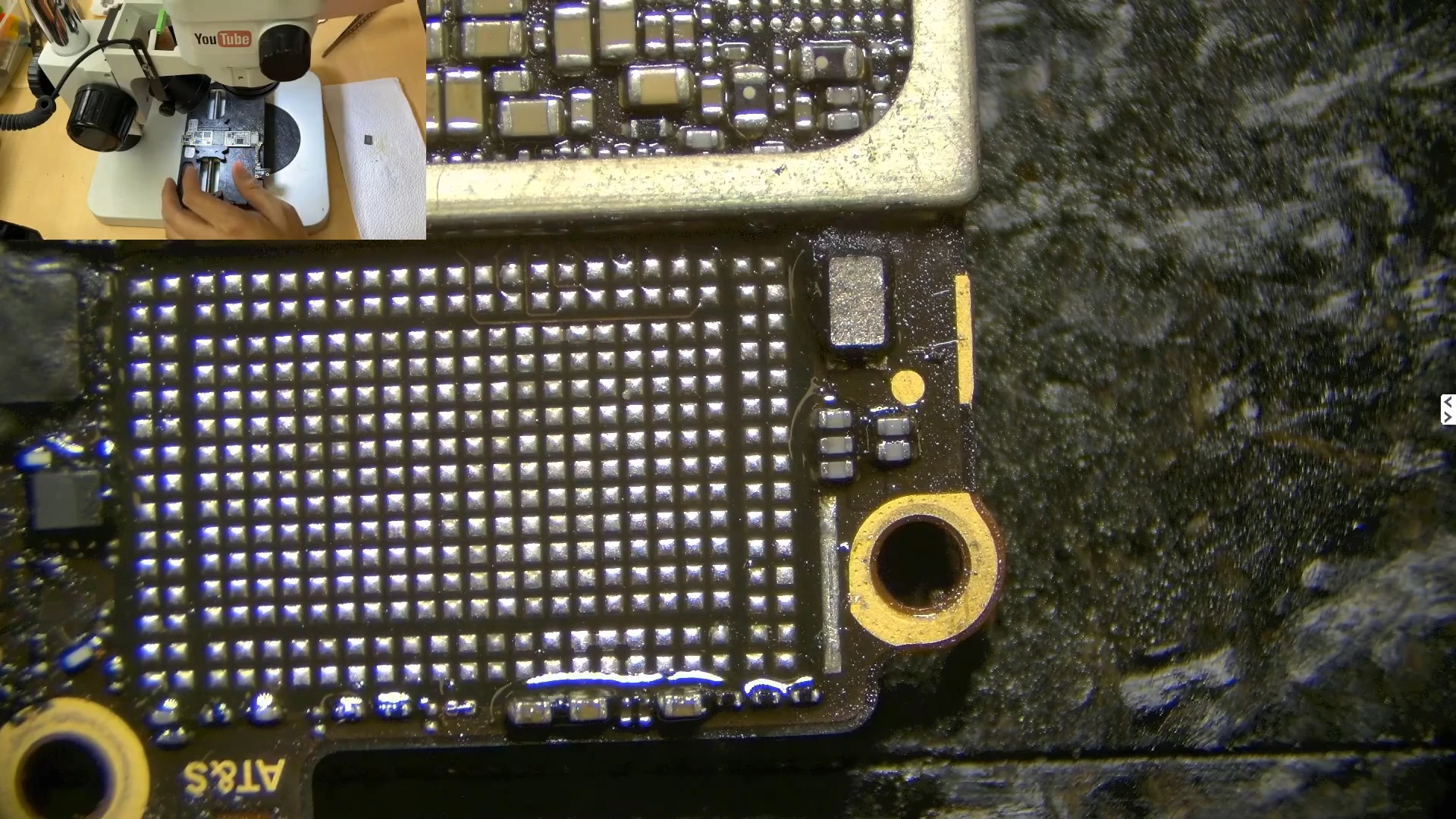
After the visual inspection, we prepared a compatible donor motherboard. Instead of trying to reconstruct the severely broken PCB, the donor board would provide a functional platform for the customer’s original components.
Removing and Reballing the Original CPU
A compatible donor motherboard was prepared to receive the required original components from the customer's damaged logic board.
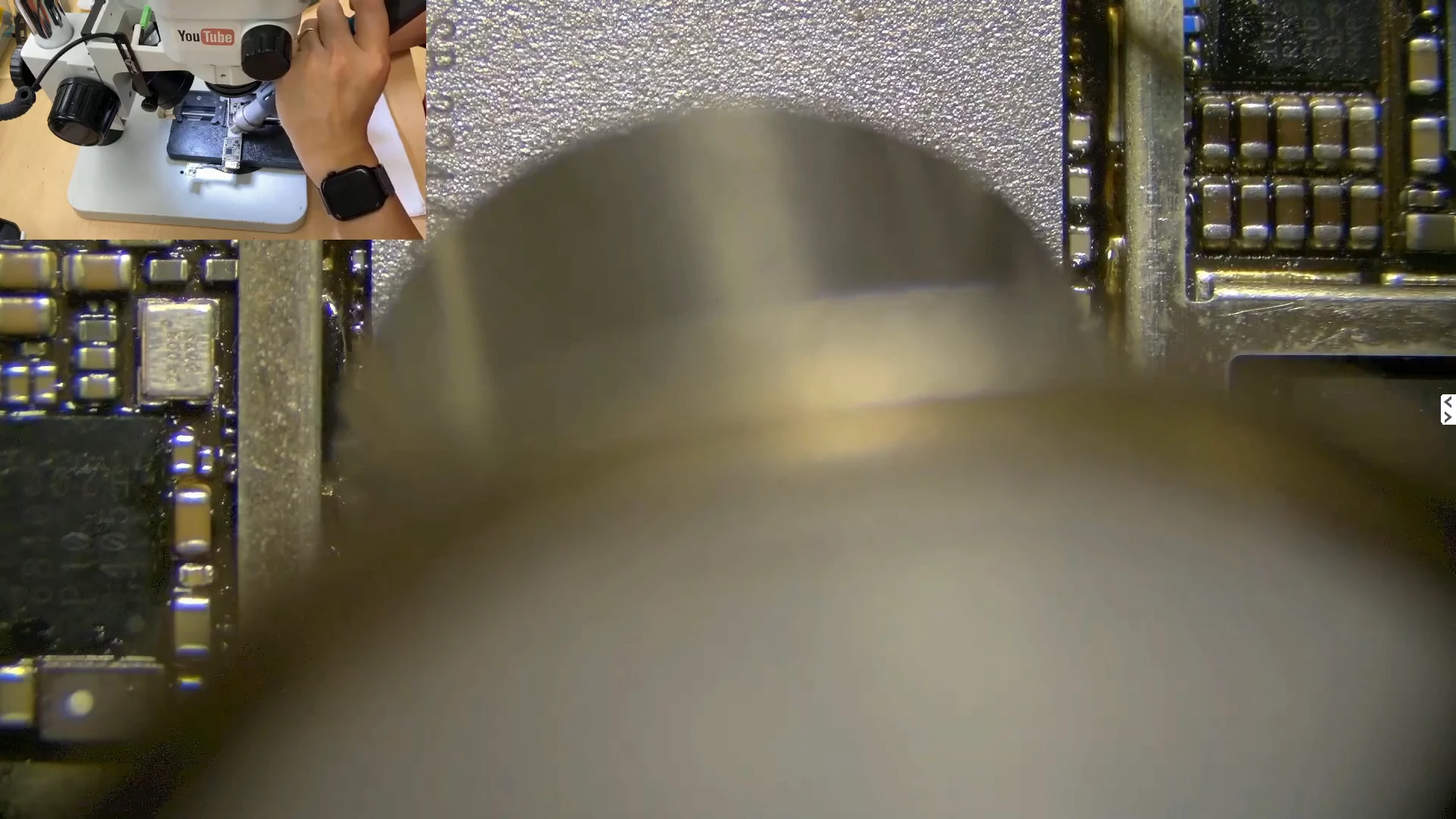
The original CPU first had to be removed from the damaged motherboard. This is a high-risk procedure because excessive heat, physical force or damage to the CPU itself could end the data recovery attempt.
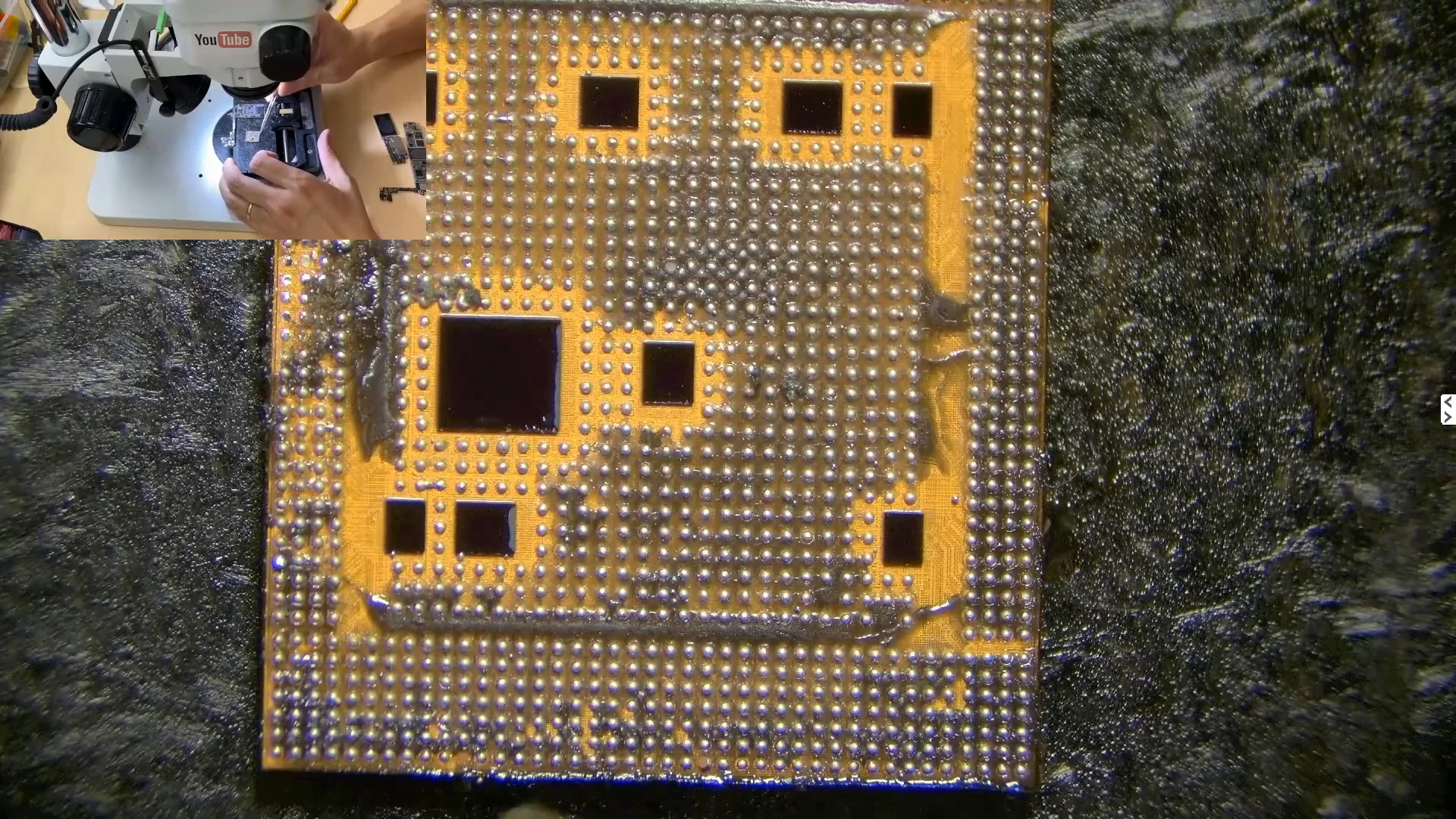
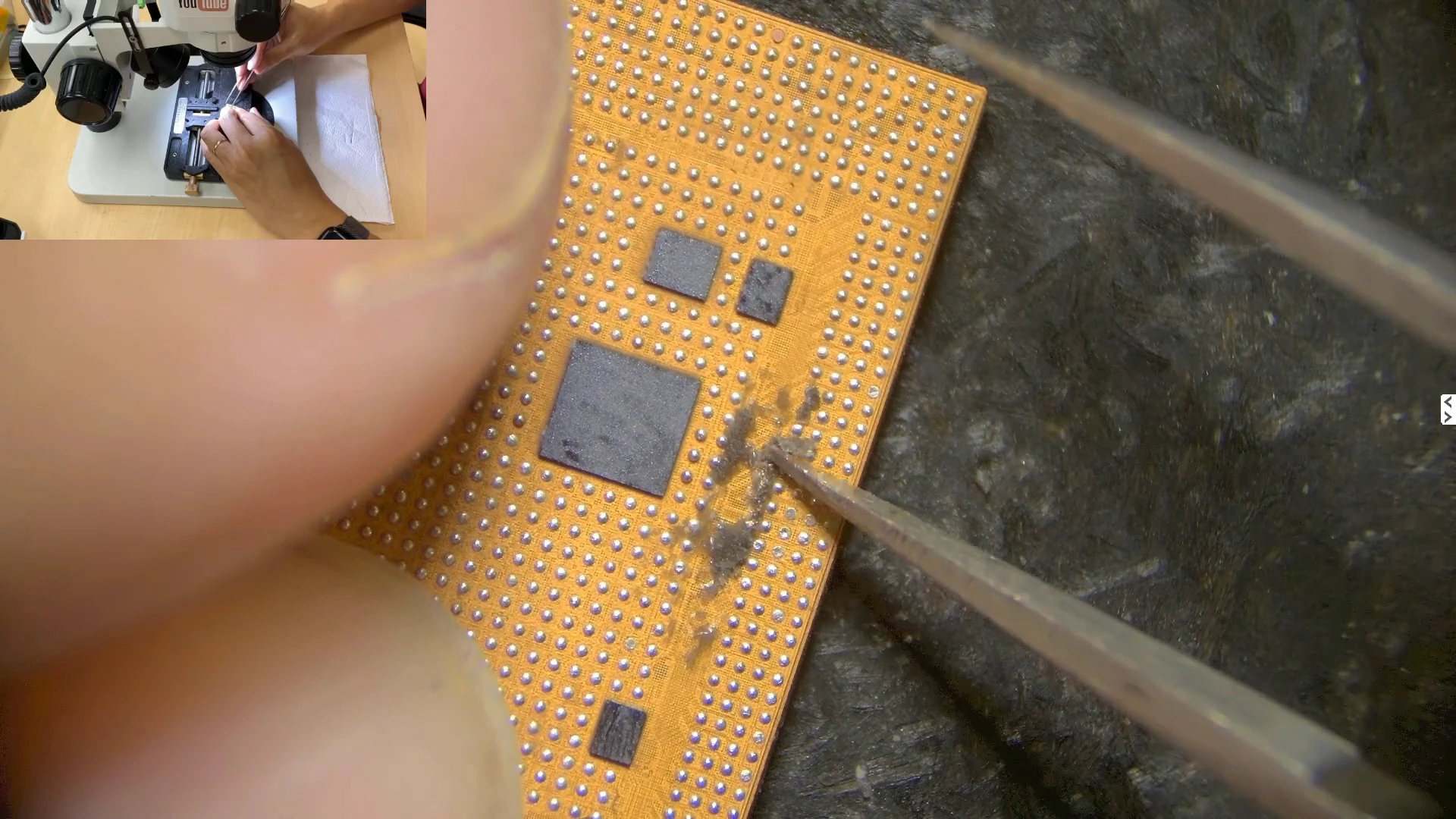
After removal, we inspected the CPU again. There were no obvious ripped pads or visible physical damage, so we continued by removing the remaining underfill glue and preparing the CPU for reballing.
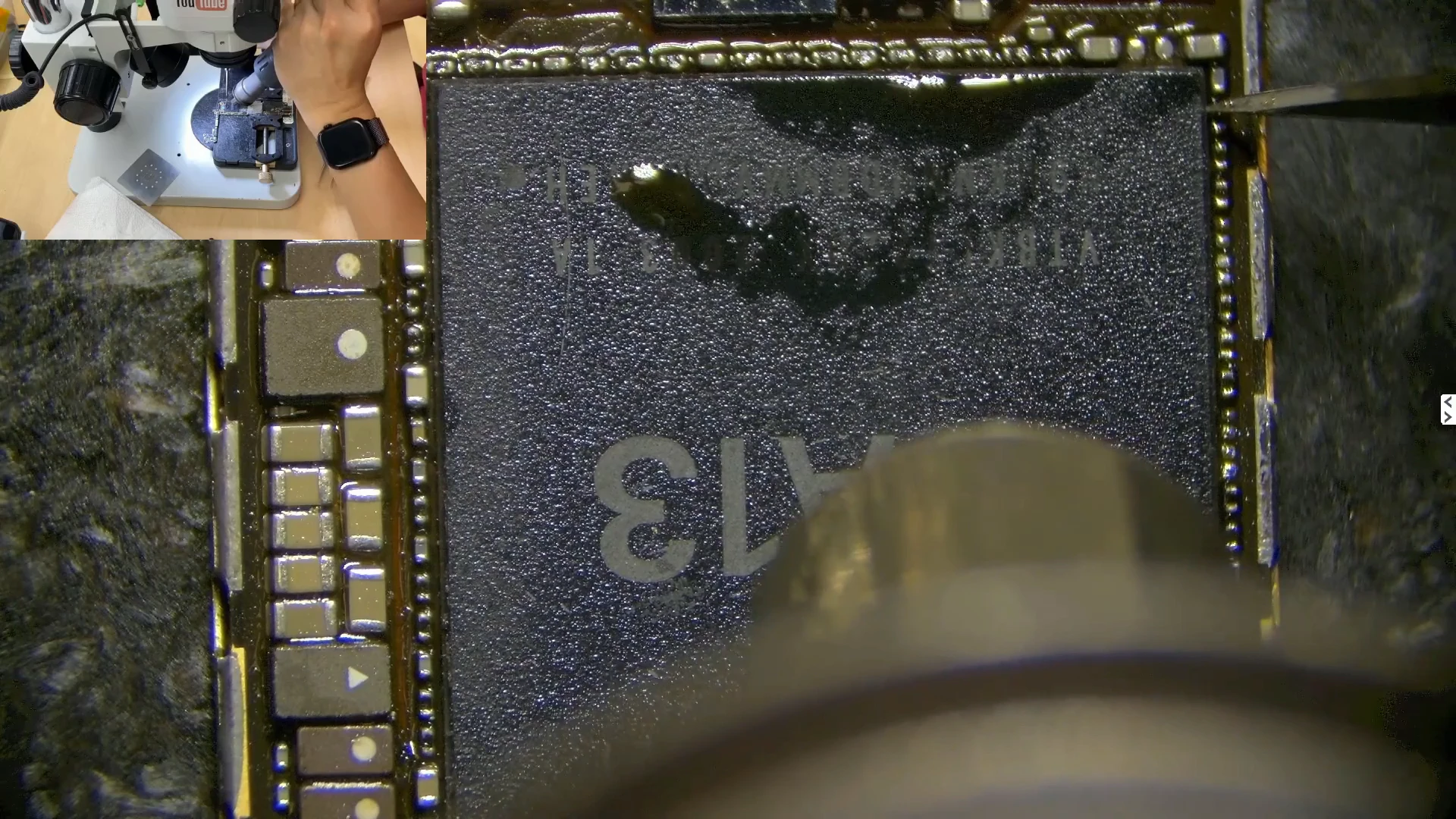
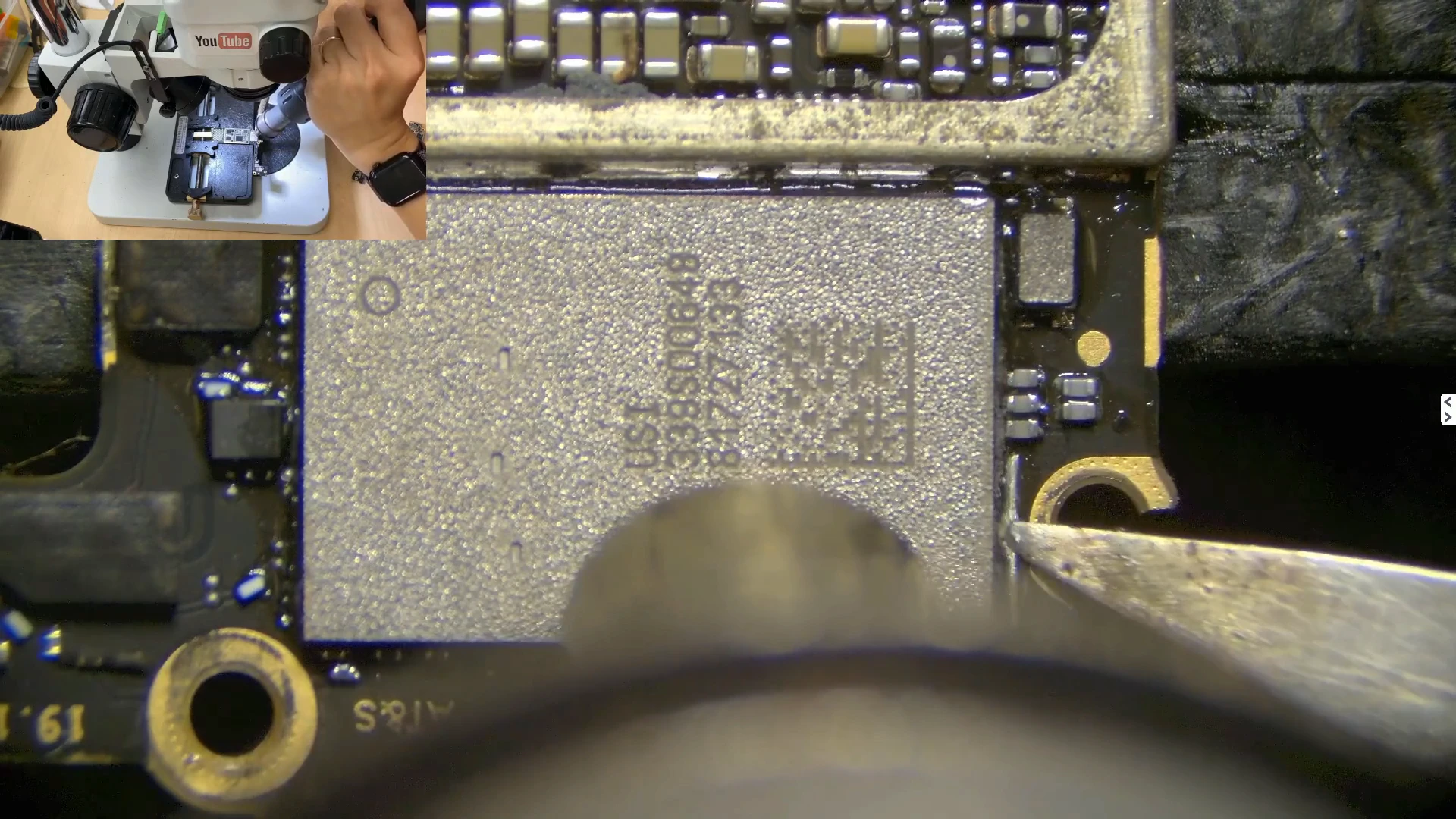
The original CPU was carefully removed from the severely damaged motherboard for the donor-board transplant.
After removal, the original CPU was visually inspected again. No obvious ripped pads or visible physical damage could be seen.
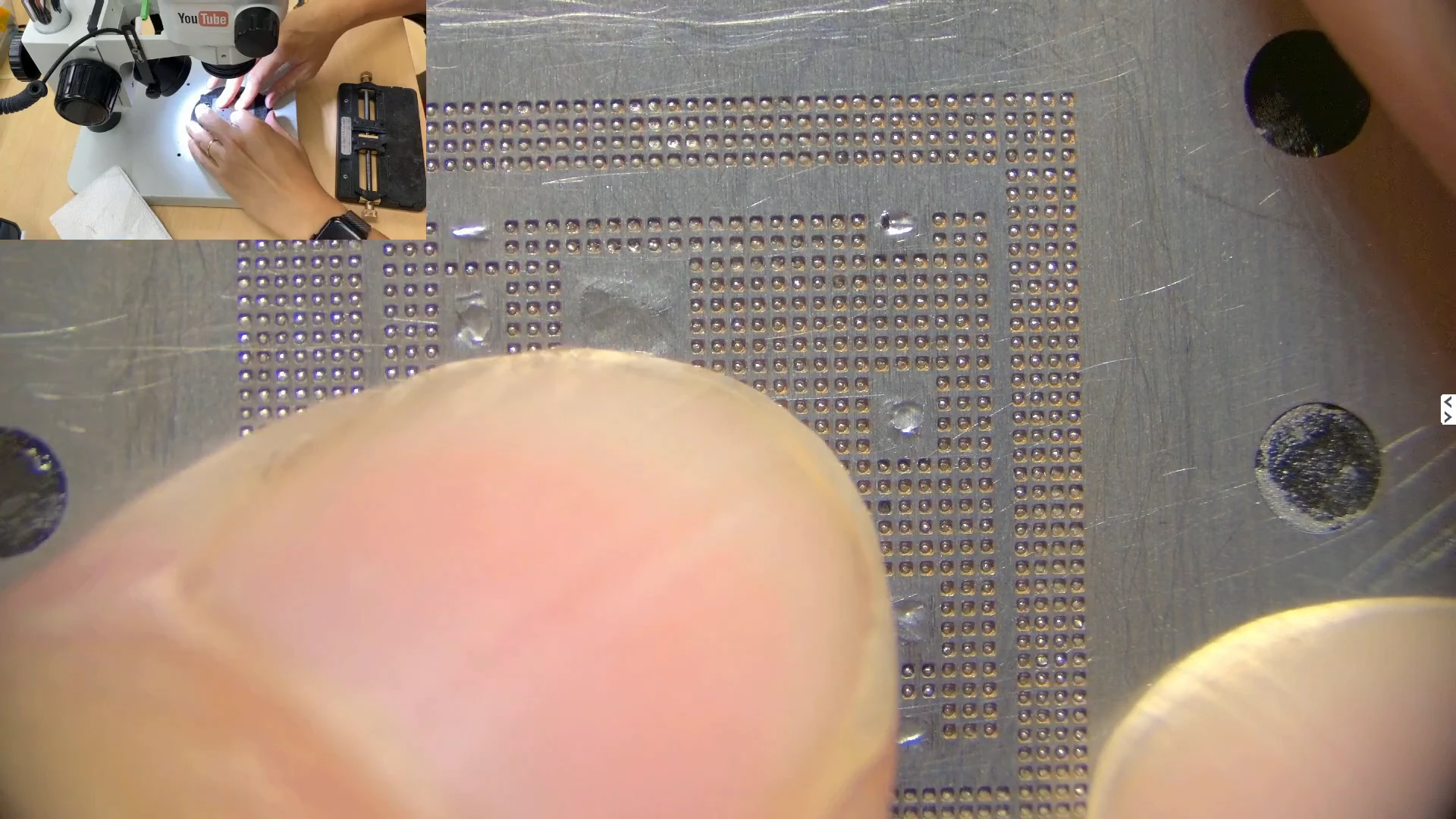
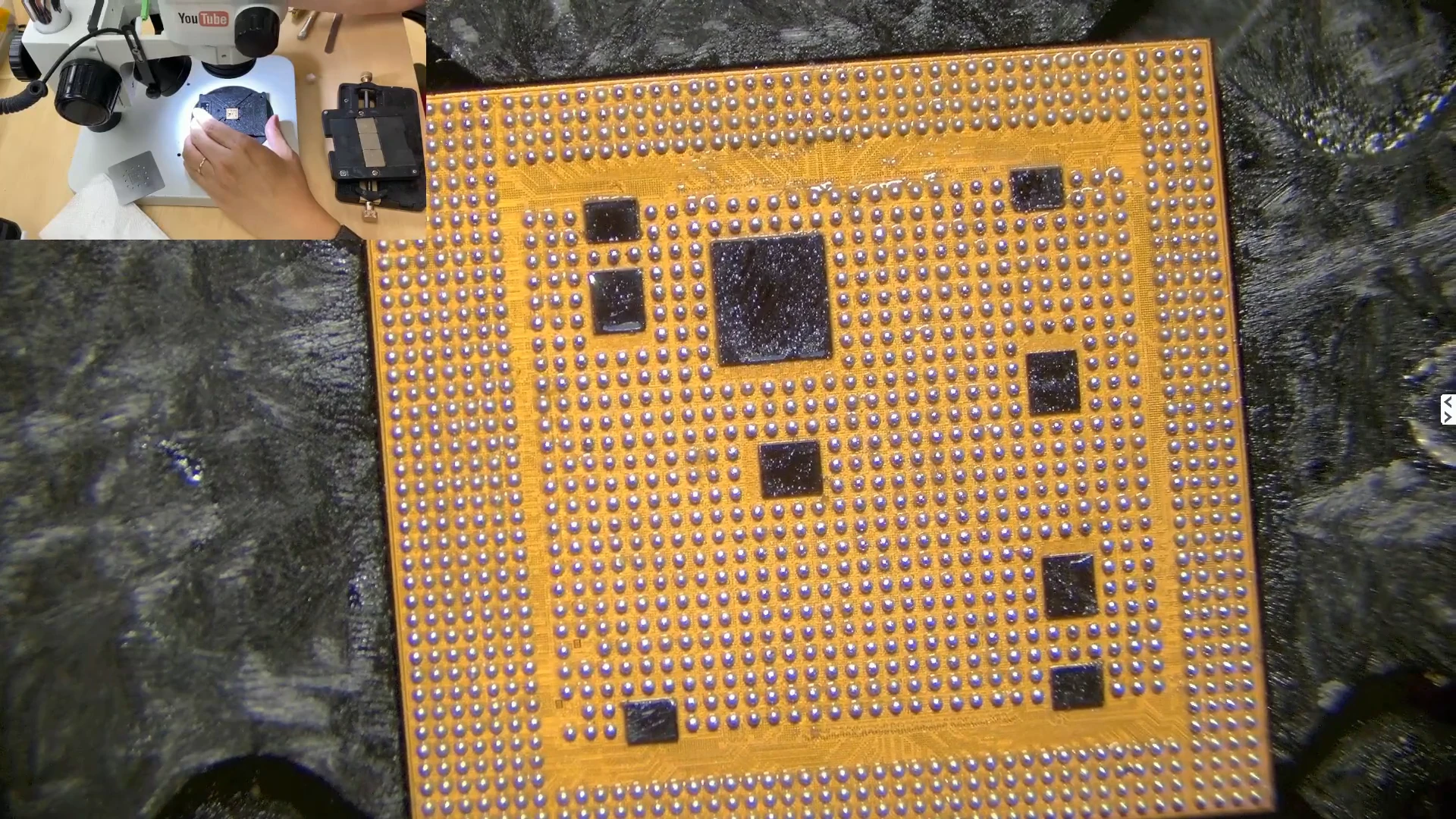
A stencil and solder paste were used to rebuild the BGA solder balls underneath the CPU. Once the new solder balls were formed and inspected, the original CPU was positioned and installed onto the donor motherboard.
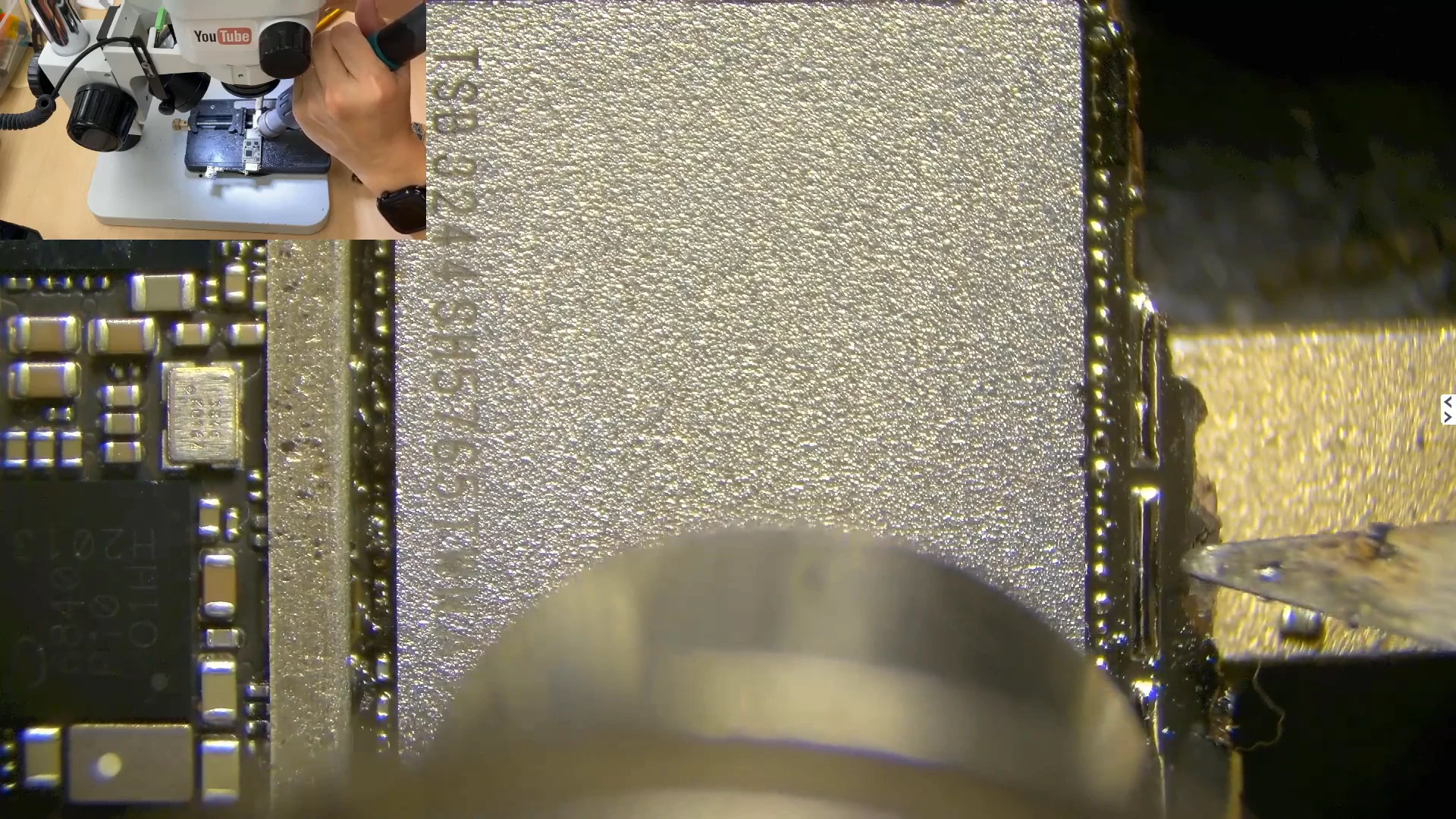
The remaining underfill glue had to be carefully removed from the original CPU before it could be prepared for installation on the donor board.
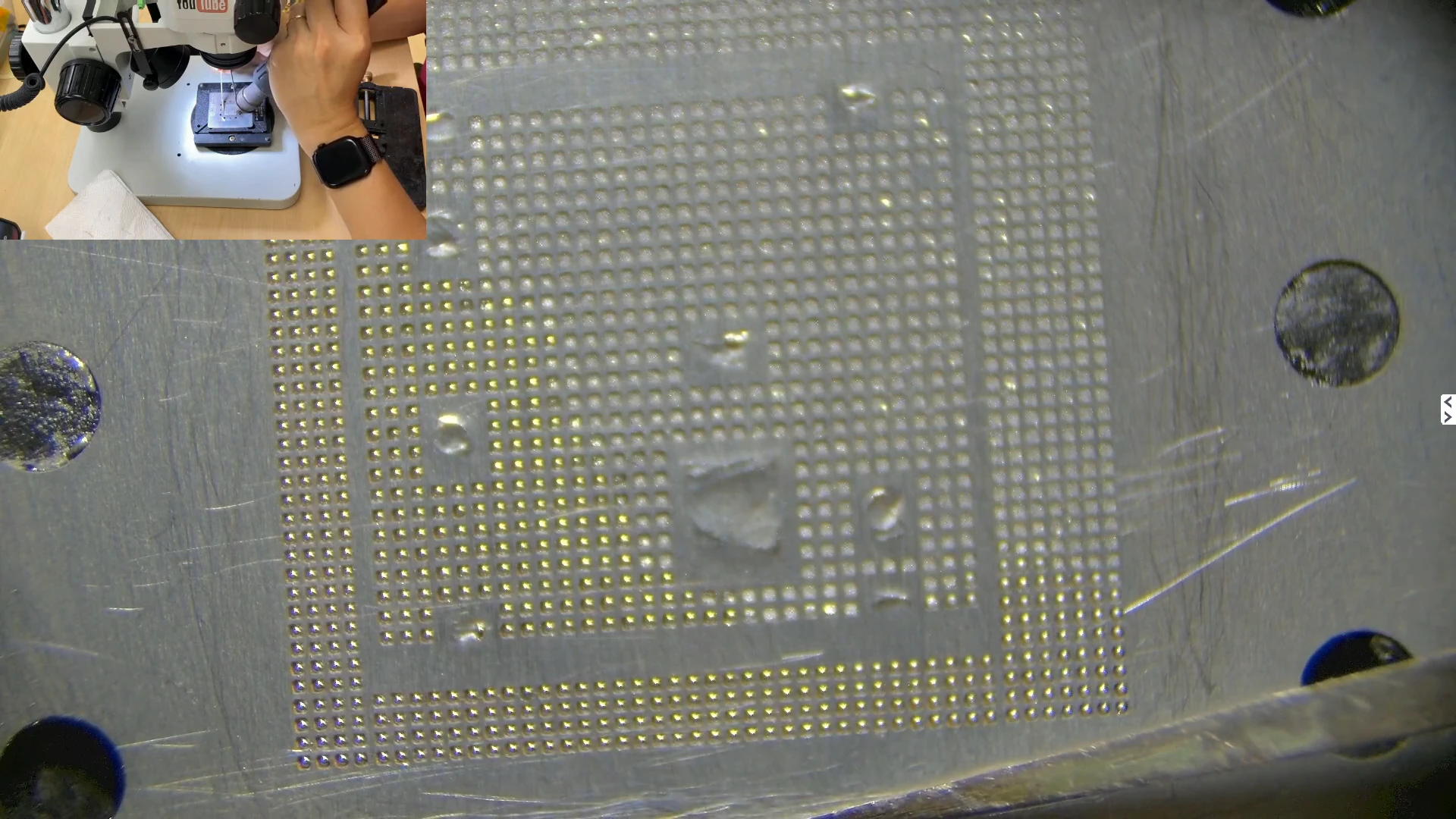
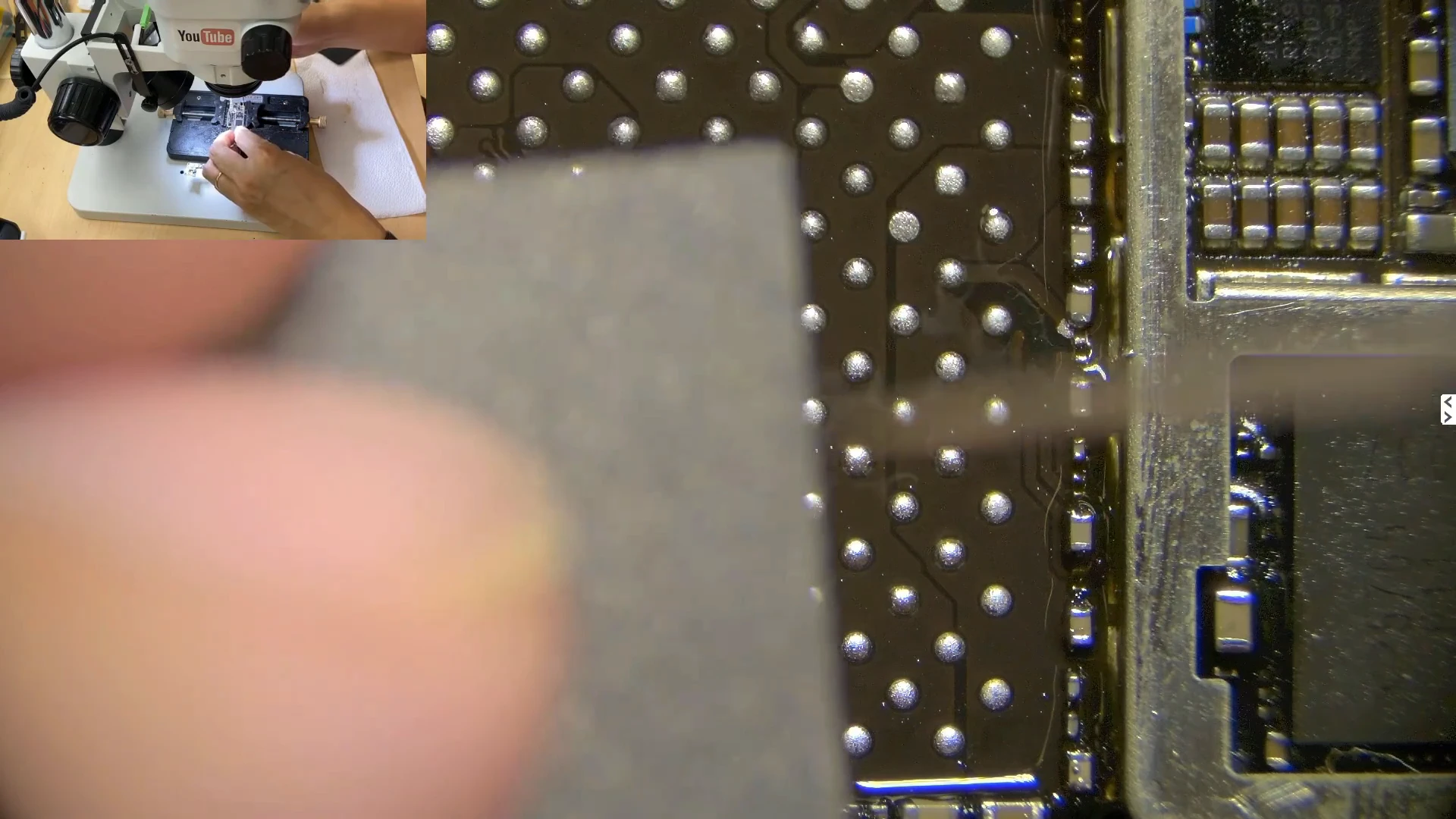
A matching stencil was aligned over the original CPU in preparation for applying new solder and rebuilding its BGA connections.
Hot air was gradually applied to form the solder paste into uniform BGA solder balls on the original CPU.
The original CPU after reballing, with a new set of solder balls ready for installation onto the donor motherboard.
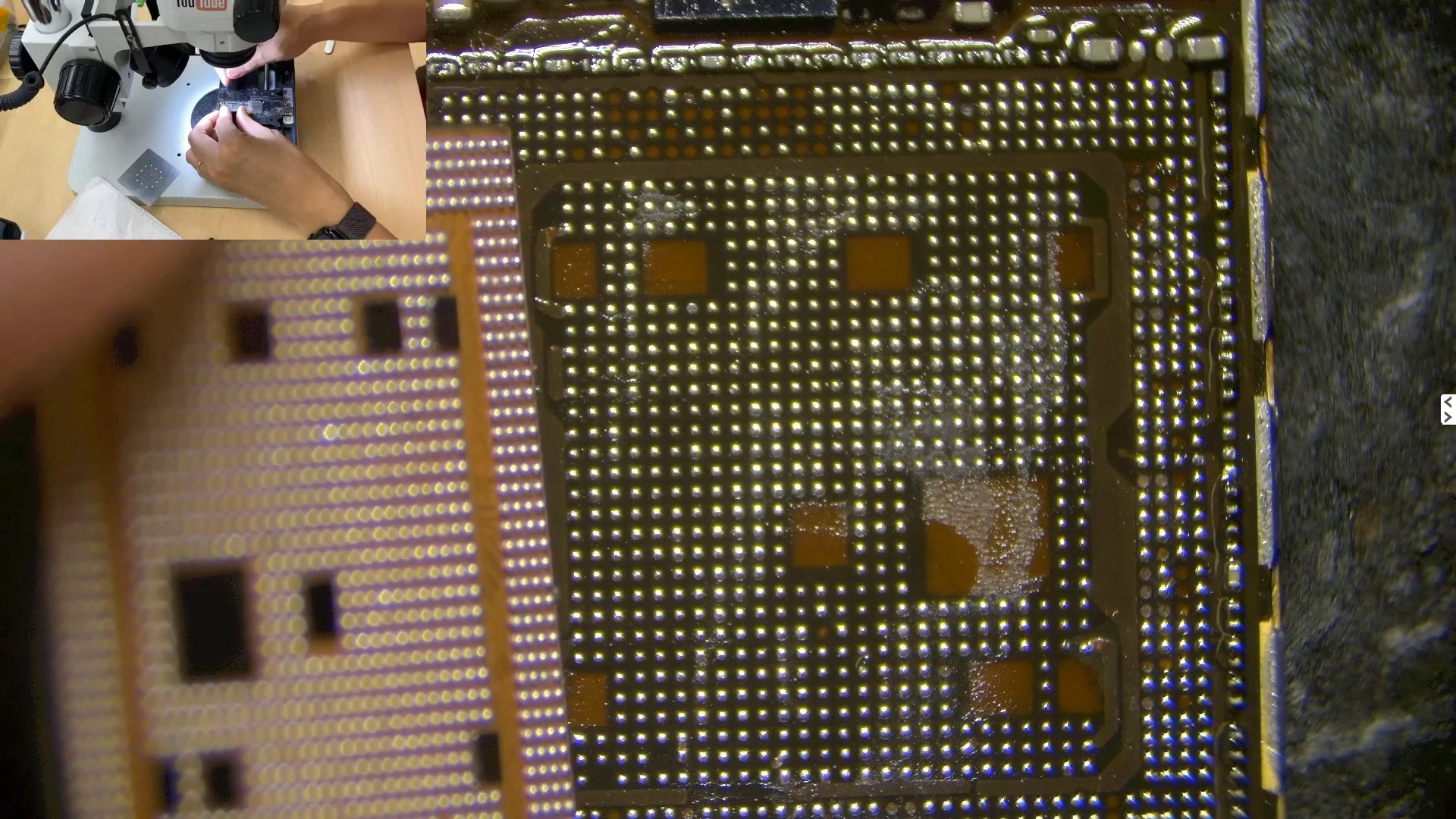
The reballed original CPU was carefully aligned with the donor motherboard before installation.
Controlled hot air was used to solder the customer’s original CPU onto the compatible donor motherboard.
Testing the CPU Before Transferring the NAND
We did not immediately transfer the customer’s NAND.
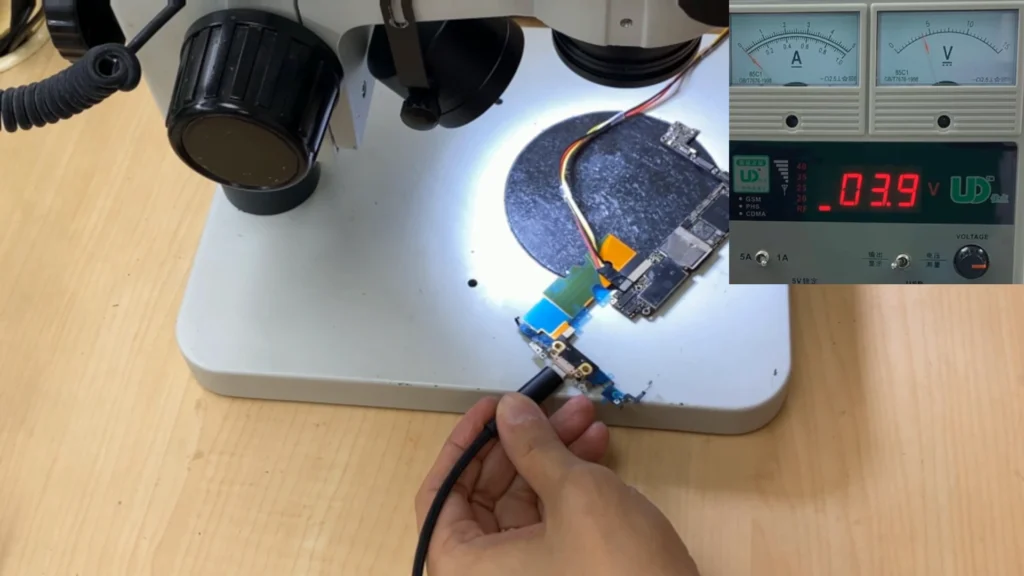
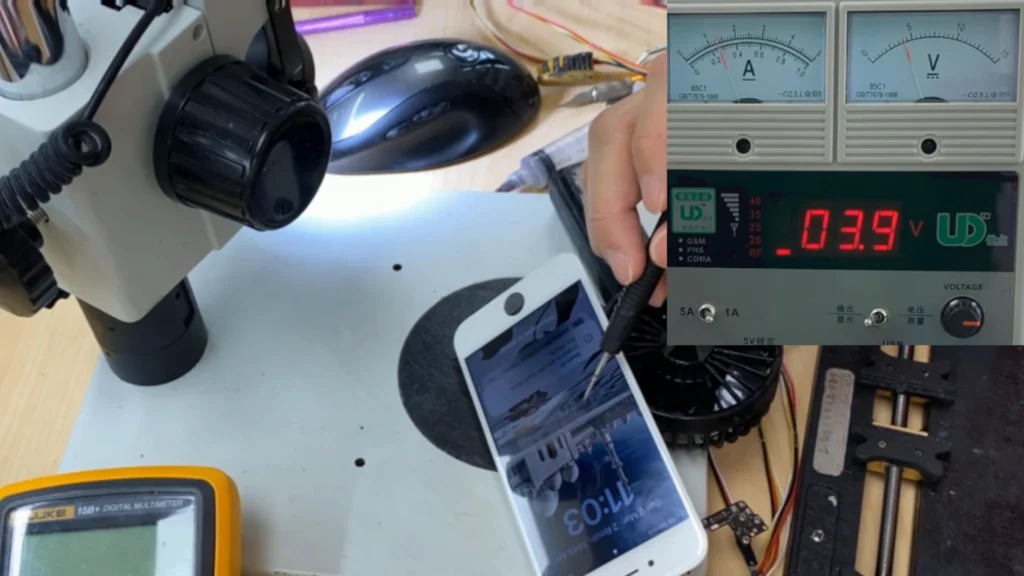
After installing the original CPU, we first connected the donor motherboard to a DC power supply and checked its current response. The board responded normally enough for us to continue testing.
Before transferring the NAND and other components, we tested the donor board's power response and connected it to a computer to check whether the transplanted CPU could communicate correctly.
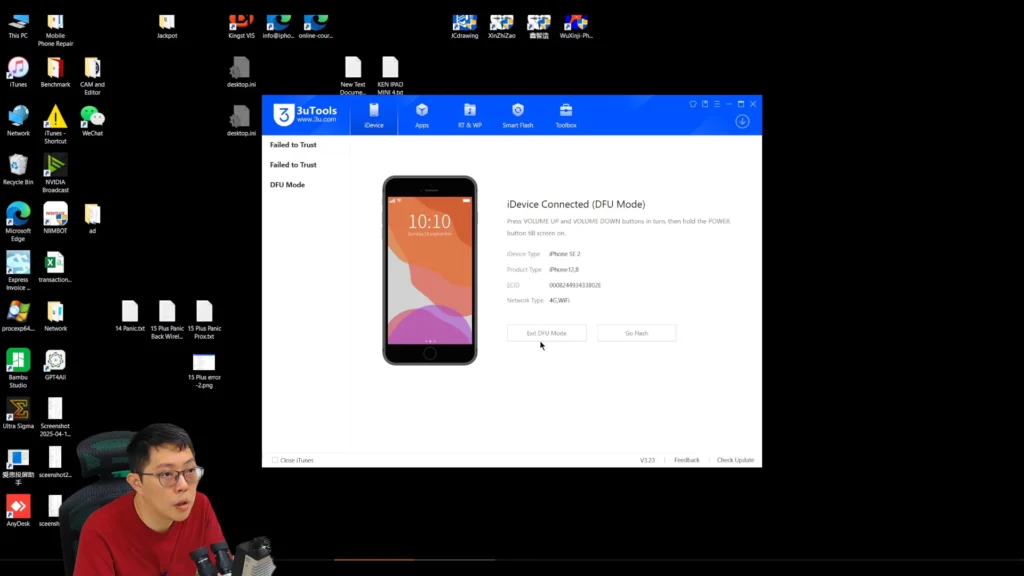
We then connected the motherboard to a computer through USB. The computer successfully detected it in DFU mode and identified the device as an iPhone SE (2nd generation).
The computer successfully detected the board as an iPhone SE 2 in DFU mode. This confirmed that the transplanted CPU was functioning sufficiently to proceed with the next stage of the recovery.
This was an important checkpoint. It gave us functional evidence that the transplanted CPU was operating and communicating sufficiently to continue the recovery process.
Only after reaching this stage did we proceed with removing and transferring the customer’s original NAND.
Transferring the NAND and Other Required Original Components
After confirming that the transplanted CPU could communicate with the computer, we continued with the remaining original components required for the data recovery.
Transferring the Original NAND
The NAND flash memory contains the customer’s stored data, including the encrypted iOS file system. It cannot simply be replaced with a blank or donor NAND if the objective is to recover the original data.
We carefully removed the original NAND from the damaged motherboard. It was then cleaned, reballed and positioned onto the donor motherboard before being soldered into place.
At this stage, we were still working with the customer’s original NAND. Nothing had been erased, restored or replaced.
After confirming CPU operation on the donor board, the original NAND containing the customer’s encrypted data was removed from the damaged motherboard.
After reballing, the customer’s original NAND was aligned with its position on the donor motherboard.
The original NAND was soldered onto the donor motherboard as part of reconstructing the required original component set.
Transferring the Logic EEPROM
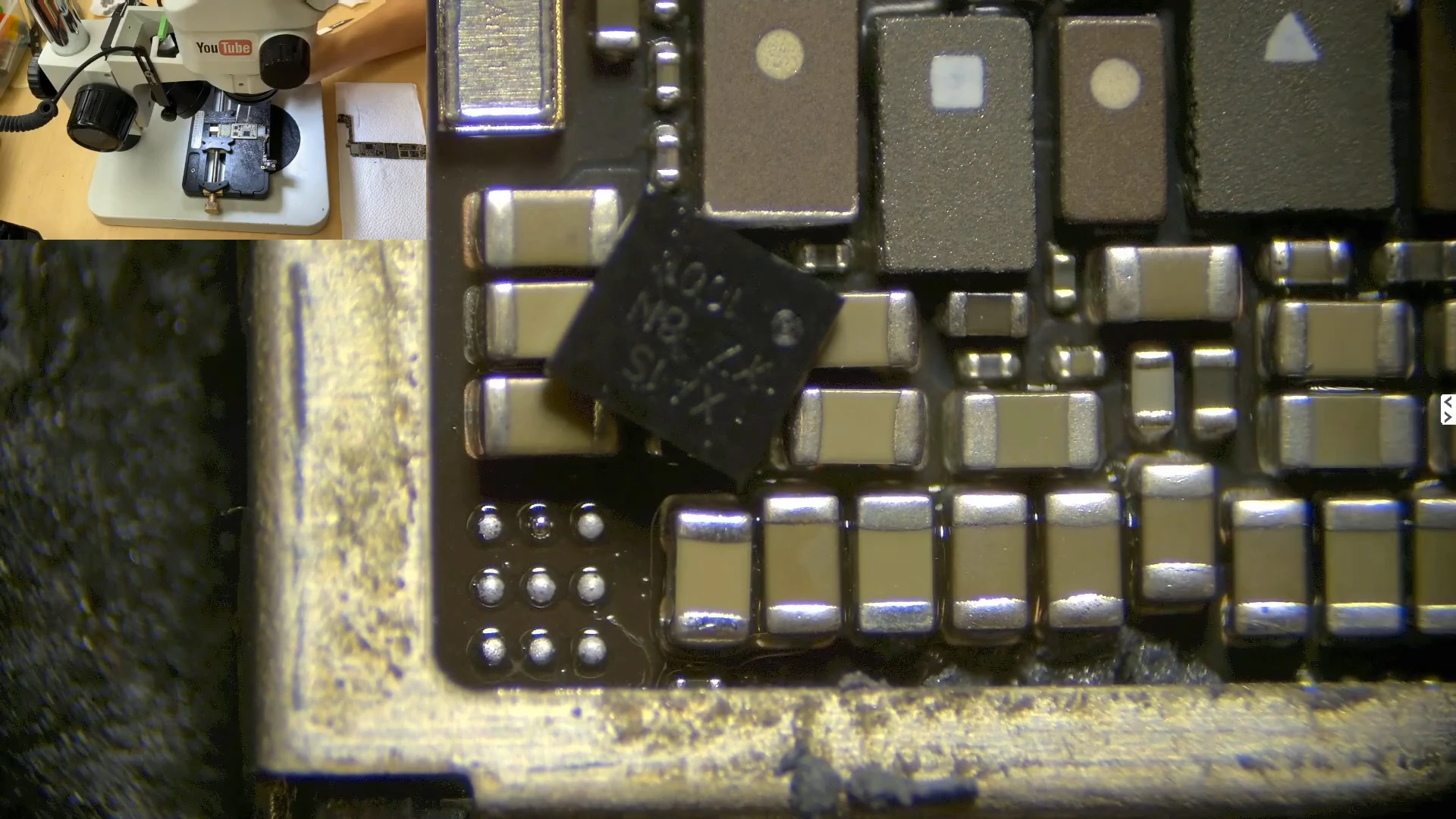
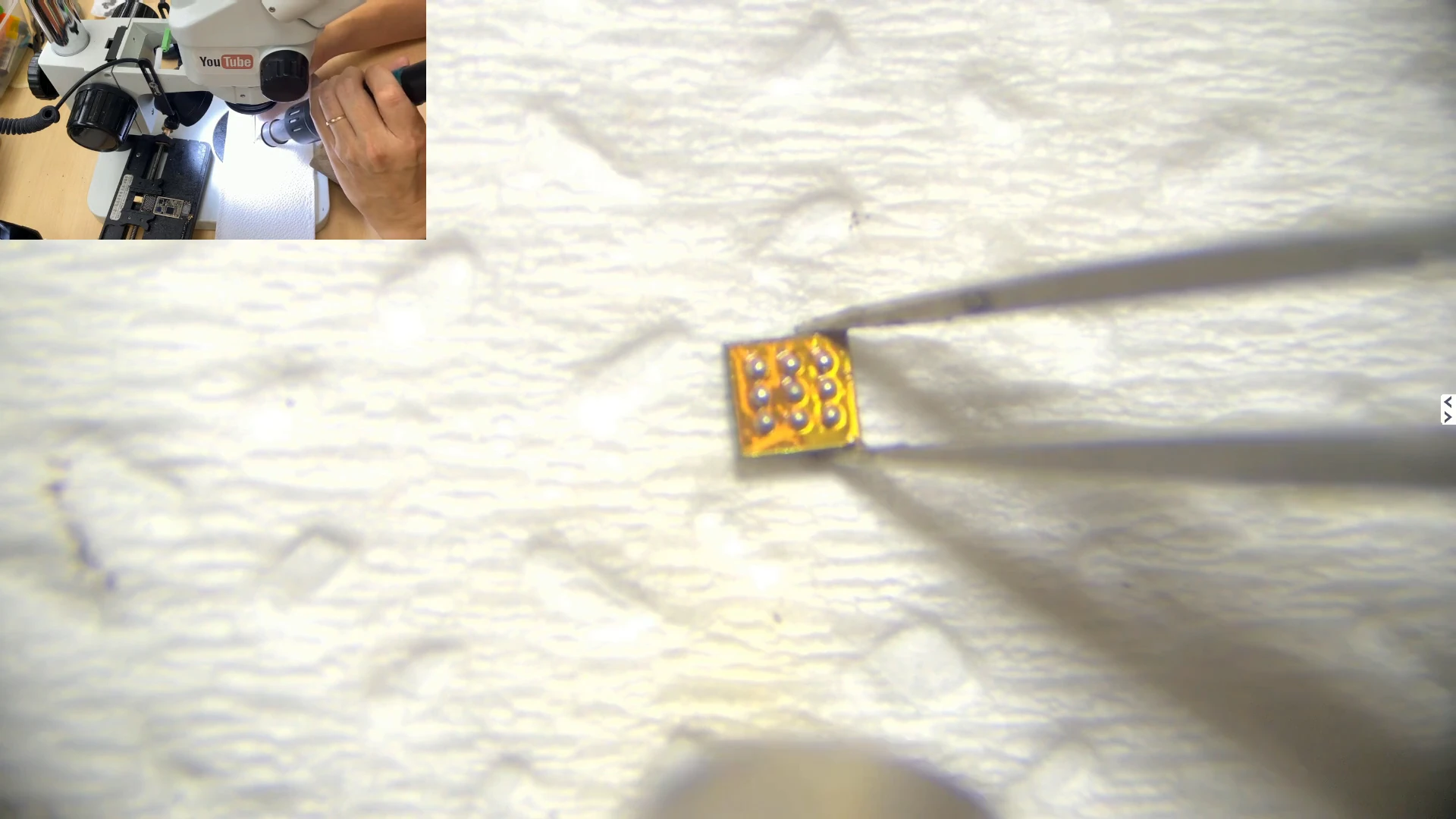
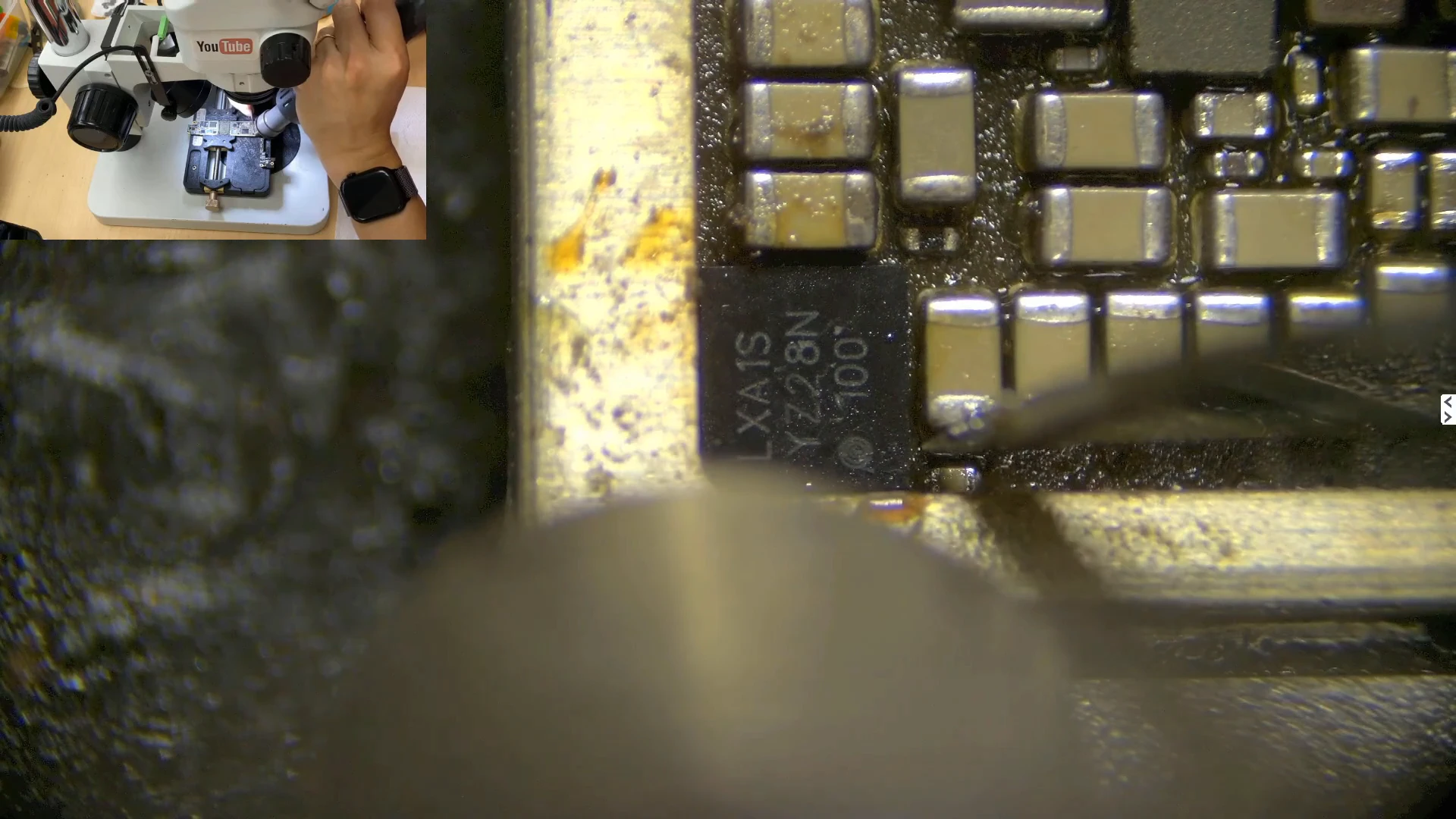
Next, we removed and reballed the original logic EEPROM before installing it onto the donor motherboard.
This preserved the original device-specific information required as part of the reconstructed motherboard. Together with the CPU and NAND, it allowed us to continue rebuilding the original system on a functional donor PCB.
The original logic EEPROM was removed from the damaged motherboard for transfer to the donor board.
The original logic EEPROM was cleaned and reballed before installation onto the donor motherboard.
The reballed original logic EEPROM was installed onto the compatible donor motherboard.
Transferring the NFC IC
The original NFC IC also needed to be transferred.
On this model, the NFC IC communicates with the CPU as part of Apple’s security system. If the required NFC circuit is not functioning correctly after the transplant, the iPhone may fail to enter iOS normally and repeatedly ask for the passcode.
We call this symptom a passcode loop. We have documented this problem separately with actual symptoms and repair examples in our iPhone Passcode Loop Fixarticle.
For this data recovery transplant, we transferred the required original NFC IC to avoid this security-related problem and allow the original iOS system to load normally.
The original NFC IC was also transferred because the security pairing involved in this circuit can affect normal iOS startup and passcode operation.
Why We Also Transferred the Original Wi-Fi IC
We also transferred the customer’s original Wi-Fi IC instead of leaving the donor board’s Wi-Fi configuration in place.
For this recovery, having working Wi-Fi was useful after the phone successfully entered iOS. It allowed the recovered device to connect to the internet so the customer’s data could be backed up to iCloud.
This can be particularly useful for customers who send their devices to us by courier. Once the required data has been safely backed up and confirmed, returning the reconstructed device may not always be necessary if the customer’s only objective was data recovery.
It also avoids unnecessarily replacing or reconfiguring the original Wi-Fi-related data, which can introduce additional complications during a recovery where preserving the existing data is the priority.
The original Wi-Fi IC was transferred so Wi-Fi could remain available without introducing unnecessary changes to the customer’s data configuration.
The donor board’s Wi-Fi IC was removed to prepare the board for the customer’s original Wi-Fi component.
Did the Donor Board Transplant Recover the Original Data?
After transferring the required original components, we connected a display and powered on the reconstructed motherboard.
The iPhone successfully booted into iOS. When the screen displayed the customer’s original wallpaper, this was the first clear indication that the original encrypted system had loaded successfully.
The reconstructed motherboard successfully booted into iOS and displayed the customer's original wallpaper—the first clear indication that access to the original data had been restored.
After receiving the customer’s passcode, we were able to unlock the iPhone and access the original data.
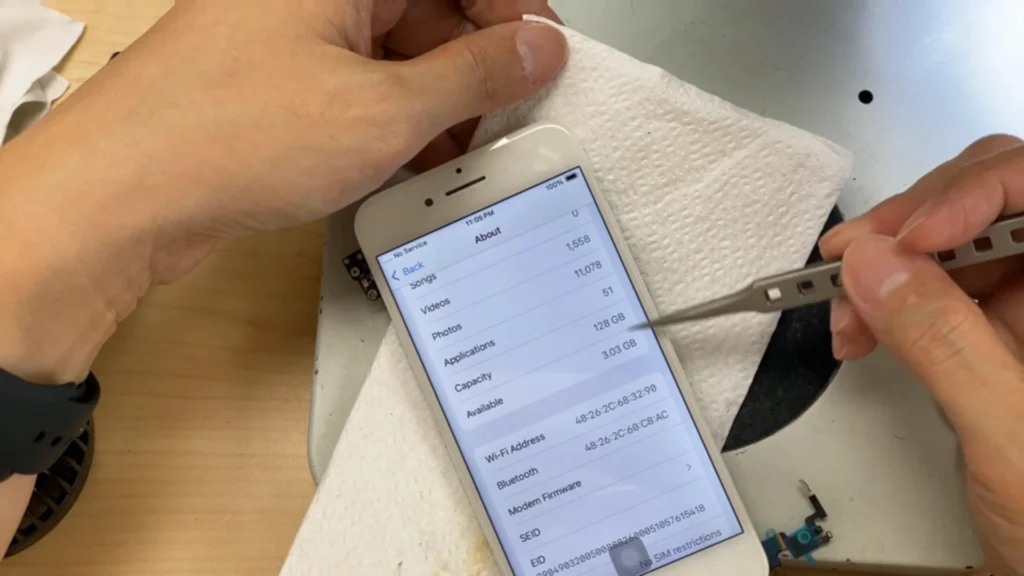
The Settings page showed the original 128 GB storage configuration with only 3.03 GB remaining. The device contained 11,078 photos and 1,558 videos, all accessible again through the customer’s original iOS installation.
This is an important distinction. We did not recover the data from the donor motherboard. The donor motherboard only provided a functional platform for the customer’s original components.
The data remained associated with the customer’s original encrypted system. By preserving and successfully transplanting the required original components, we were able to regain access to that system and recover the data in this particular case.
Motherboard Repair vs Donor Board Transplant for Data Recovery
A donor-board transplant is not automatically required just because an iPhone motherboard is badly damaged.
If the original motherboard can be repaired safely, repairing it is normally our preferred approach. This keeps the original components on their existing board and reduces the number of high-risk procedures required for data recovery.
A good example is our severely water-damaged iPhone motherboard repair. The motherboard had severe corrosion and damage across multiple circuits, but after careful diagnosis we were able to repair the original motherboard and recover the customer’s data without performing a donor-board transplant.
A donor-board transplant is considered when the original PCB is damaged so severely that repairing the board itself is no longer practical. In this case, the motherboard was physically broken into two pieces, so we used a compatible donor board as the new working platform.
The decision is made after diagnosis, not simply from the appearance of the damaged phone.
Our priority is to choose the most practical approach to access the original data while minimizing unnecessary work on critical components.
iPhone Broken Motherboard Data Recovery FAQ
Can data be recovered if an iPhone motherboard is broken?
Yes, in some cases. A physically broken motherboard does not automatically mean the data is lost.
The most important factor is whether the original CPU, NAND and other required components are still functional. We need to inspect and diagnose the motherboard before determining whether repairing the original board or performing a donor-board transplant is an option.
Can I recover my data by replacing the iPhone motherboard?
No. Replacing the motherboard with another working board will not bring back the data from your original iPhone.
The donor motherboard contains its own components and does not contain your photos, videos or other data. For data recovery, we need to work with the required original components from your damaged motherboard.
Can you just move my original NAND to another working motherboard?
No. Moving only the NAND to another working motherboard will not give you access to the original data.
The data stored on an iPhone is hardware-encrypted. The original NAND must work together with the original CPU and other required paired components for the encrypted data to be accessed.
This is why a data recovery transplant is very different from simply removing the NAND and installing it onto another motherboard. We need to preserve and transfer the required original components as a matched set.
Can you recover the data if the CPU or NAND is physically damaged?
No. For this type of data recovery, we require the original CPU and NAND to be functional.
If either the CPU or NAND has been physically damaged and is no longer functional, we do not have a method to recover the data.
Do you always need a donor-board transplant if the motherboard is severely damaged?
No. A donor-board transplant is only considered when repairing the original motherboard is no longer practical.
Even severely damaged motherboards can sometimes be repaired directly. We first diagnose the damage and choose the approach that requires the least unnecessary work on the critical original components.
Will you erase or reset my iPhone during diagnosis?
No. If your objective is data recovery, we will not erase, reset or restore the iPhone during the diagnosis process.
Preserving the existing data is the priority throughout the assessment and recovery attempt.
Can you guarantee that my data will be recovered?
No. The result depends on the condition of the original motherboard and its critical components.
Severe physical damage can affect the CPU, NAND or other components required to access the encrypted data. We need to inspect and diagnose the device before determining whether a recovery attempt is possible.
The successful case shown in this article does not mean every physically damaged iPhone can be recovered.
How much does iPhone data recovery cost and how long does it take?
The cost and recovery time depend on the type and severity of motherboard damage. We need to diagnose the device before we can confirm the repair method, price and estimated recovery time.
For our current pricing, diagnosis process, estimated turnaround time and data recovery options, please see our Data Recovery Service page.
Can I send my damaged iPhone to you by courier?
Yes. You can send the device to us for diagnosis and data recovery without visiting our shop.
We accept mail-in repairs from customers in Malaysia and overseas. For the shipping address, packing instructions, courier information and the complete process, please follow our Mail-In Repair Instructions.
Sending a Device from Overseas for Data Recovery
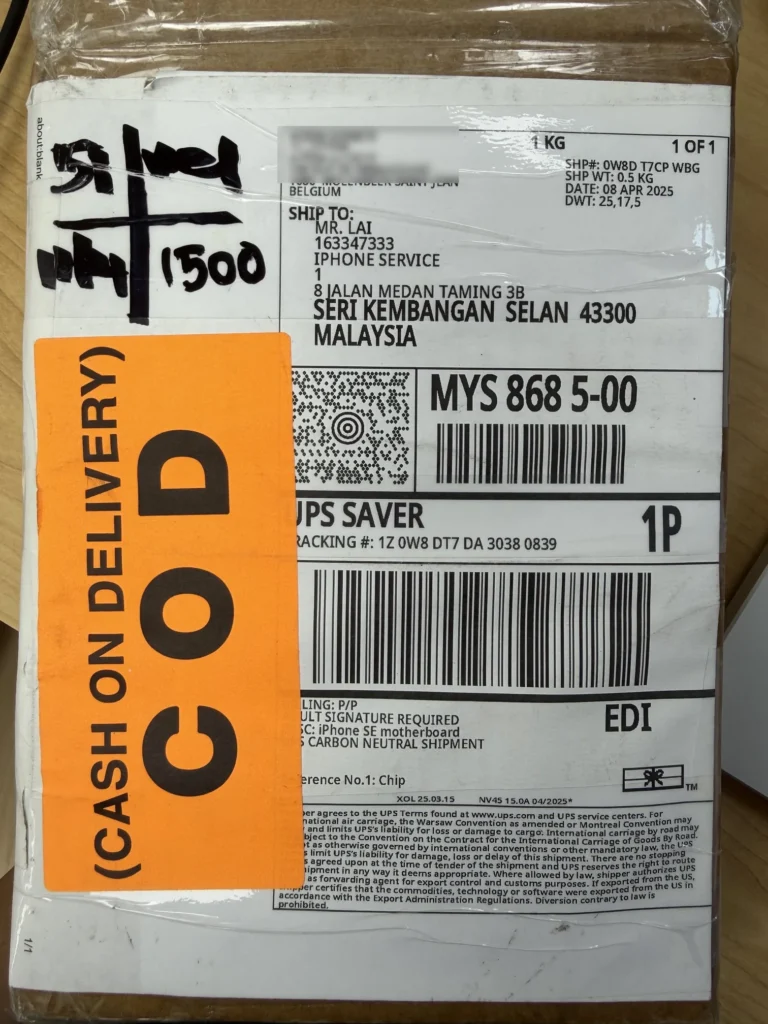
This motherboard was sent to us from Belgium for data recovery. Customers do not need to visit our shop in Malaysia personally, and we also accept devices sent from overseas for diagnosis and recovery.
For international shipments, it is important to follow the shipping and declaration instructions carefully. Our Mail-In Repair page explains how to pack the device, what information to include and how to declare the shipment.
This damaged iPhone motherboard was sent to us from Belgium for data recovery, showing that overseas customers can also use our mail-in repair service.
Why the Declared Parcel Value Matters
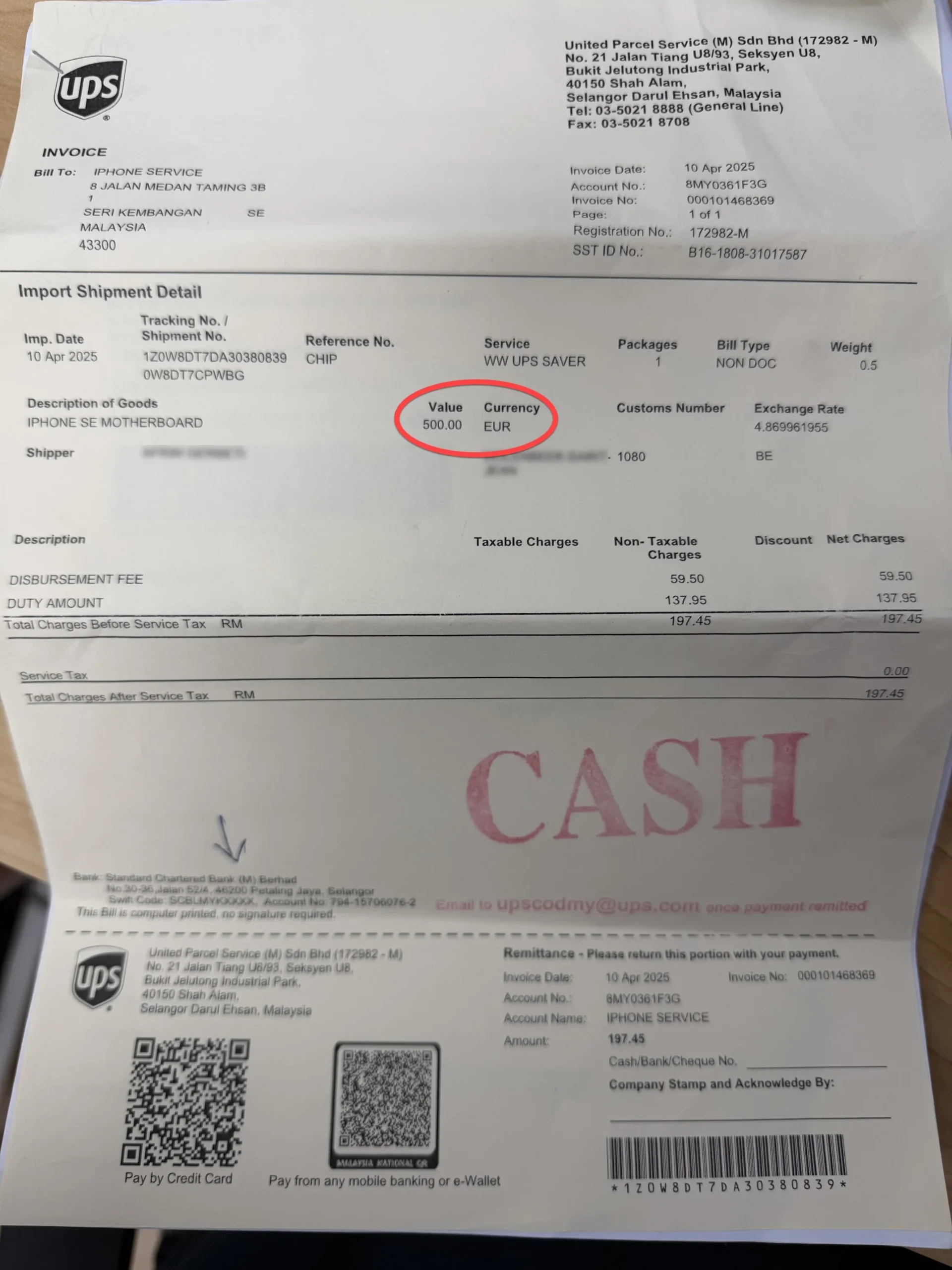
In this shipment, the declared value was entered much higher than necessary. As a result, the parcel was assessed for import tax when it arrived in Malaysia, even though the item being sent was a damaged motherboard for data recovery.
This is why we provide specific declaration instructions for mail-in repairs. Please follow the instructions on our Mail-In Repairpage before shipping your device. An unnecessarily high declared value may result in import taxes or additional courier charges.
Any import tax, customs duty or courier clearance charges are the responsibility of the sender/device owner. If the courier requires us to pay these charges upfront before the parcel can be delivered, we will not accept the parcel.
Please make sure any required charges are settled with the courier before delivery to us.
The shipment incurred additional import charges because of its declared value. International customers should follow our Mail-In Repair declaration instructions carefully before shipping.
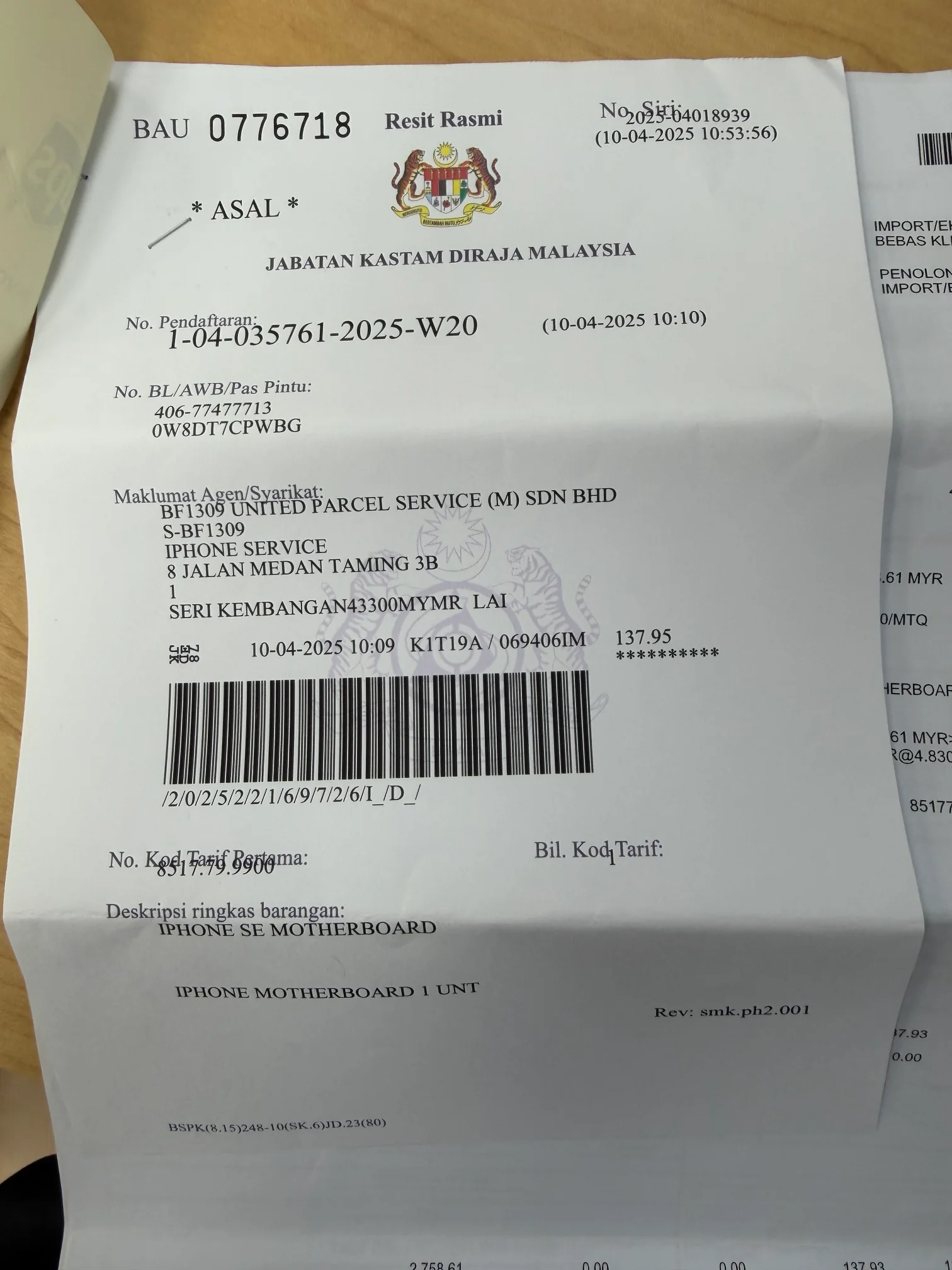
The official Malaysia Customs receipt confirms the import charges applied to this shipment. International customers should follow our Mail-In Repair declaration instructions carefully and are responsible for any customs, tax or courier clearance charges.
Conclusion
A physically broken iPhone motherboard does not always mean the data is permanently lost. What matters most is whether the original components required to access the encrypted data are still functional.
In this case, the iPhone SE motherboard was physically broken into two pieces, making repair of the original PCB impractical. After inspecting the critical components, we transferred the original CPU, NAND and other required components to a compatible donor motherboard.
The reconstructed motherboard successfully booted into the customer’s original iOS system, allowing us to unlock the device and regain access to the original photos, videos and other data.
However, a donor-board transplant is not the solution for every damaged iPhone. Whenever possible, we prefer to repair the original motherboard. The correct recovery method can only be determined after inspecting and diagnosing the actual damage.
If your iPhone has severe motherboard damage and your priority is recovering the data, you can learn more about our diagnosis process and recovery options on our Data Recovery Service page.
Don't let "data's gone" be the last word.
Send us a photo or description — we’ll assess it and get back to you.