

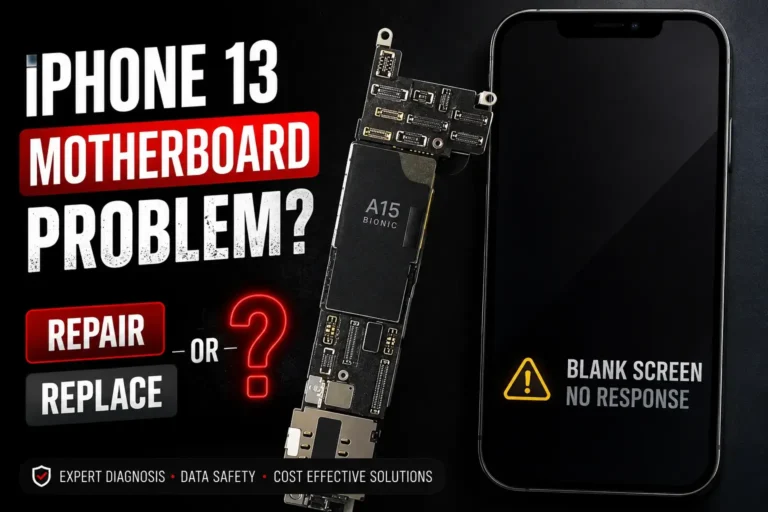
When an iPhone 13 won’t turn on, many people assume the motherboard needs to be replaced. However, a no power symptom can have several possible causes, and replacing the motherboard is not always the best or only solution.
Professional iPhone 13 motherboard repair begins with accurate diagnosis. By understanding the actual cause of the problem before any repair is attempted, unnecessary work can often be avoided while preserving the phone’s original logic board.
In this repair case, a systematic diagnosis revealed that the no power issue was caused by poor solder connections between the two layers of the motherboard. After repairing the board, the iPhone powered on normally. This article explains the diagnostic process and why identifying the root cause is an important first step in any motherboard repair.
Table of Contents
What Causes an iPhone 13 to Have No Power?
An iPhone 13 that won’t turn on does not always mean the motherboard needs to be replaced. Although a no power symptom often indicates a logic board problem, the underlying cause can vary from one device to another.
The terms “logic board” and “motherboard” refer to the same main circuit board inside the iPhone. In this article, both terms are used interchangeably.
Some of the most common causes include:
- Battery or charging system faults
- Short circuits on the motherboard
- Power management circuit failures
- Liquid damage or corrosion
- Damage caused by accidental drops or impact
- Poor solder connections within the motherboard
Because different faults can produce the same symptom, it is impossible to determine the exact cause without proper diagnosis. Identifying the root cause is the first step in deciding whether the original motherboard can be repaired, rather than replaced.
How We Diagnose an iPhone That Won't Turn On
Instead of guessing the cause, every no power iPhone follows a structured diagnostic process. This allows us to identify the actual fault before recommending any repair. Depending on the findings, some repairs may be straightforward, while others require more advanced motherboard work.
1. Eliminate External Component Problems
The first step is to rule out faults outside the motherboard.
We install a known good battery, charging port, display, and other essential components to ensure the no power issue is not caused by a faulty part connected to the motherboard.
If the phone still shows no response, we continue diagnosing the original motherboard.
2. Analyse the Motherboard Using a DC Power Supply
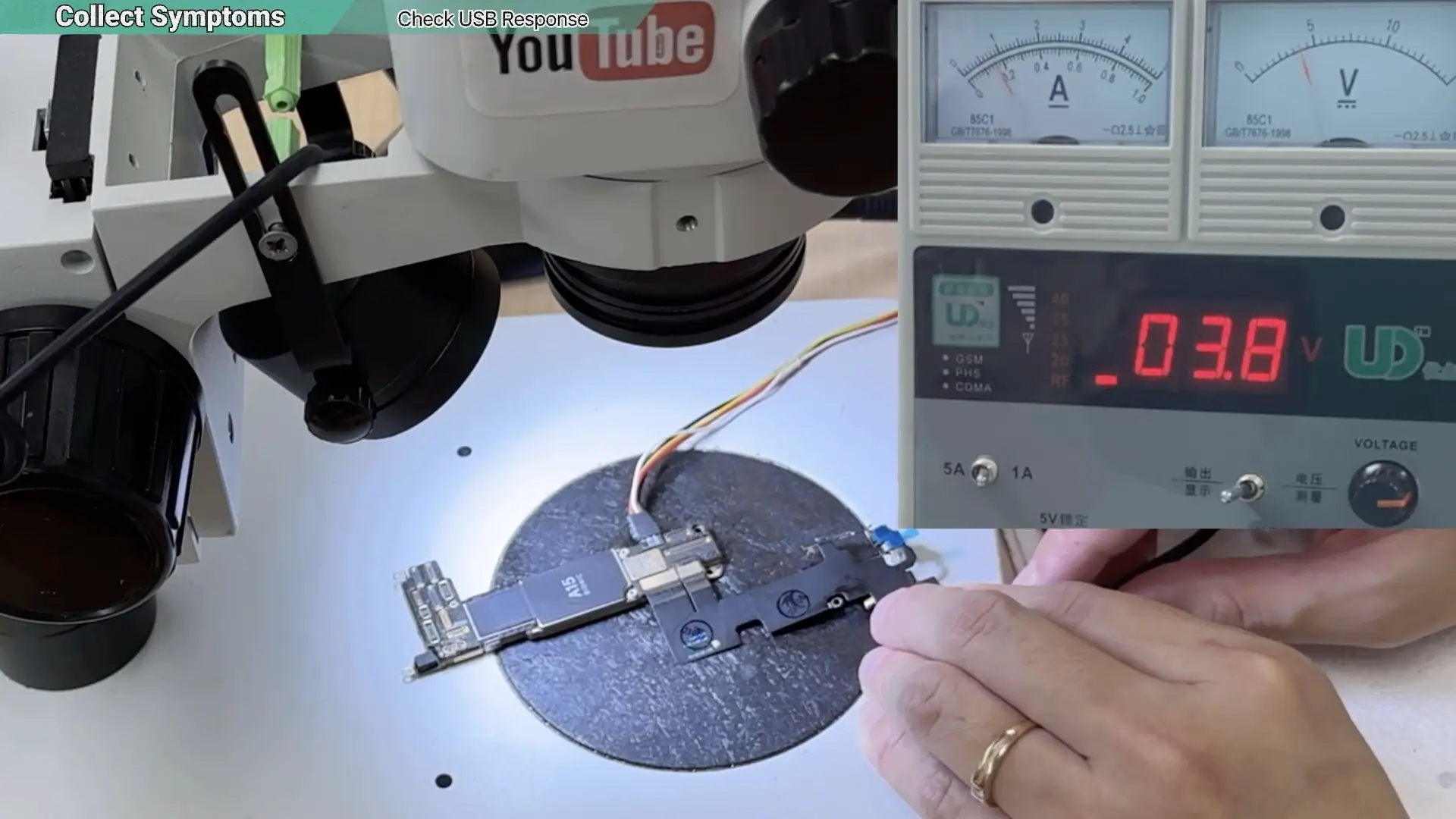
The motherboard is connected to a professional DC power supply to observe its current response during startup.
This test provides valuable information about how the motherboard behaves.
For example:
- A charging circuit fault may allow the phone to power on from the DC power supply but prevent battery charging.
- A short circuit can often be identified immediately.
- If the motherboard still shows no meaningful response, further diagnosis is required.
At this stage, more advanced repair procedures may be necessary, including separating the motherboard.
3. Inspect the Motherboard
Before separating the motherboard, it is carefully inspected for signs of damage such as:
- Liquid damage or corrosion
- Burnt components
- Physical damage
- Missing components
If no obvious fault is found, the next step is to separate the two motherboard layers for further testing.
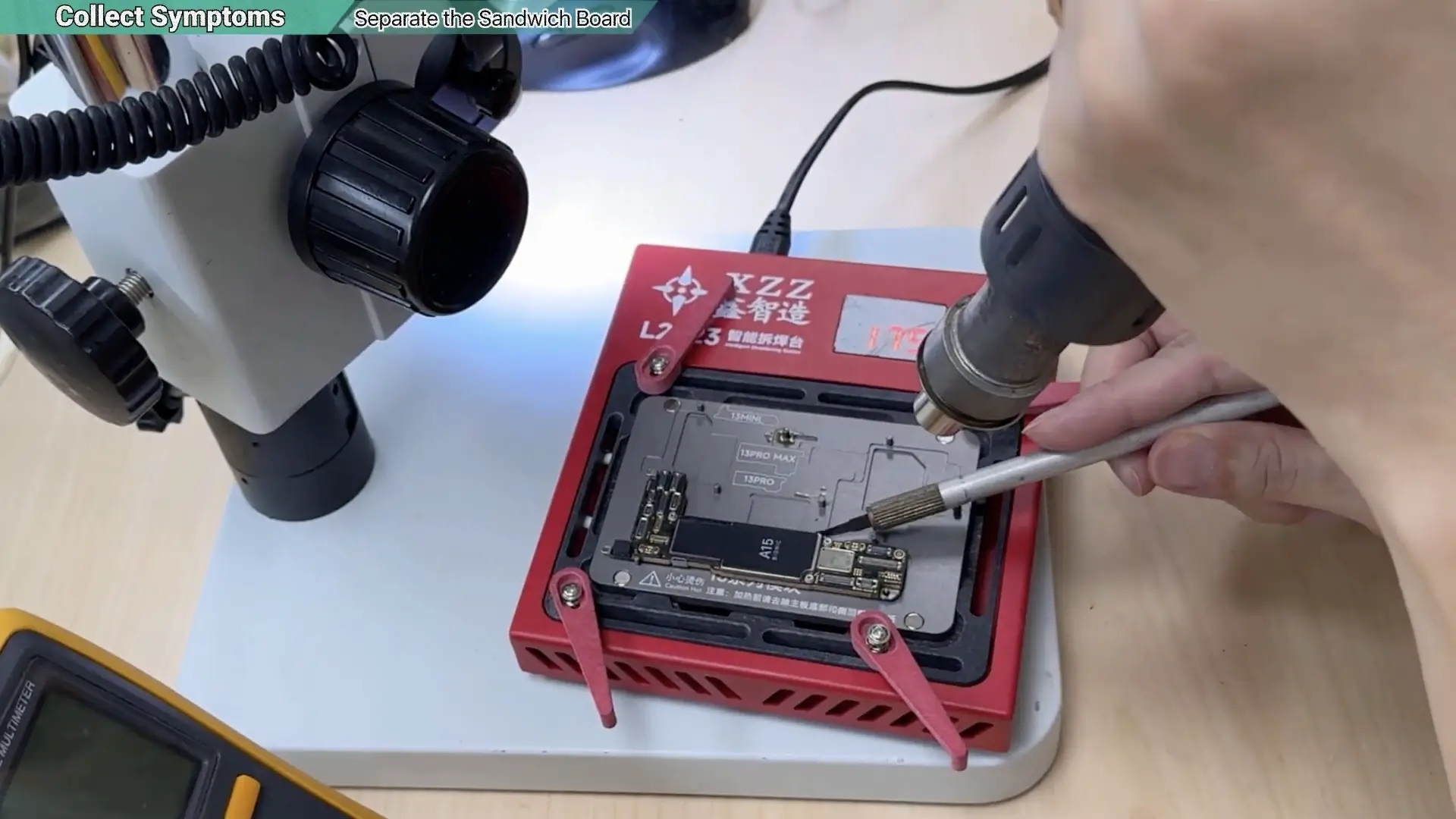
Because the iPhone 13 uses Apple’s sandwich motherboard design, this procedure requires precise temperature control and specialised equipment. Excessive heat can damage surrounding components, making proper technique essential.
4. Test Each Motherboard Layer Independently
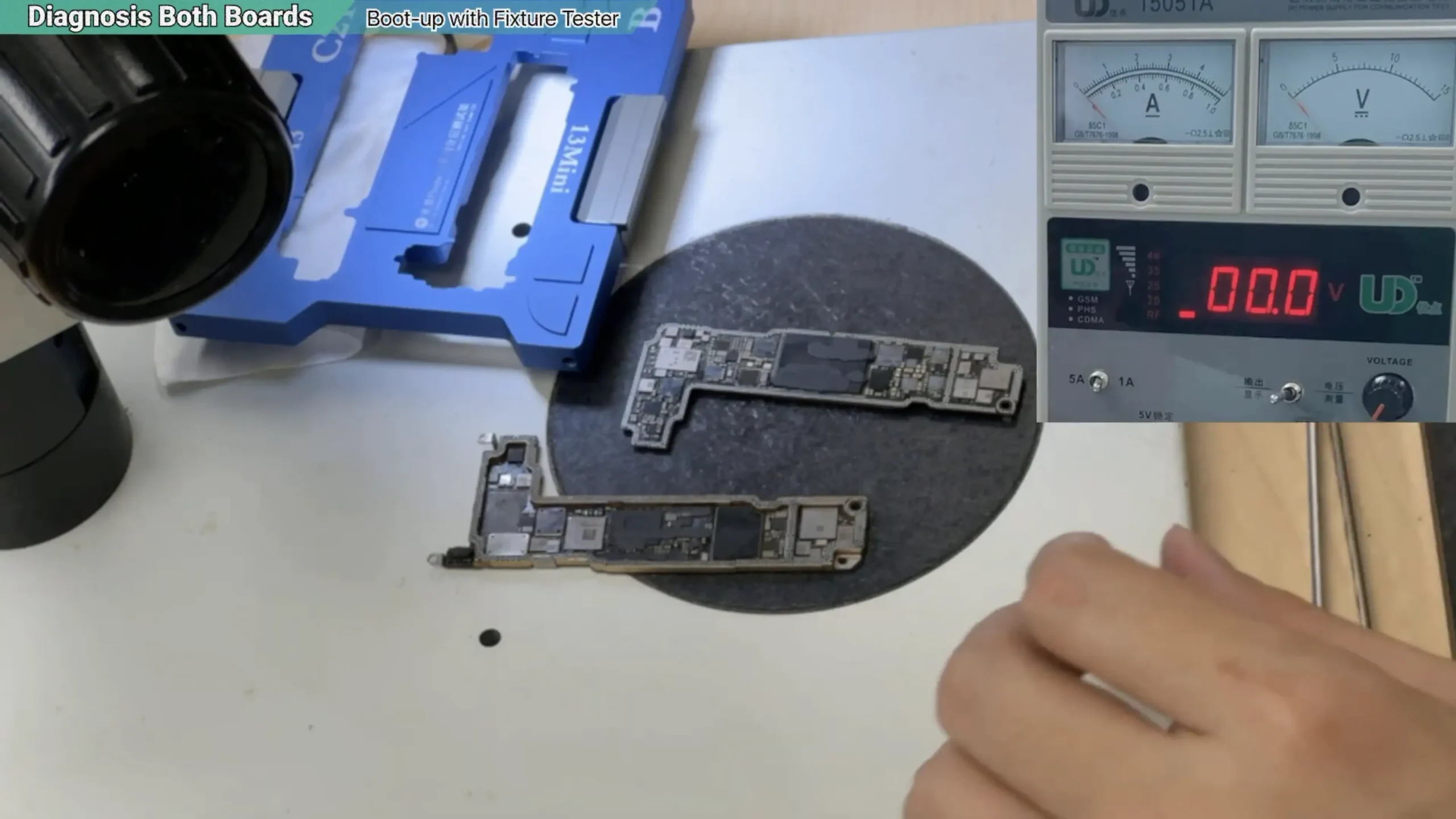
After separation, the motherboard consists of two sections:
- The main CPU board
- The radio board
The CPU board is tested independently to determine whether it can initialise correctly.
Depending on the results, the diagnosis may point towards:
- A fault within the CPU board
- A power management circuit issue
- A fault on the radio board
This step significantly narrows down the possible causes before any repair is carried out.
5. Confirm the Root Cause
To determine whether the problem lies with the radio board or the solder connections between the two motherboard layers, we use a specialised sandwich board tester.
This fixture allows both motherboard layers to be tested together without permanently soldering them back together.
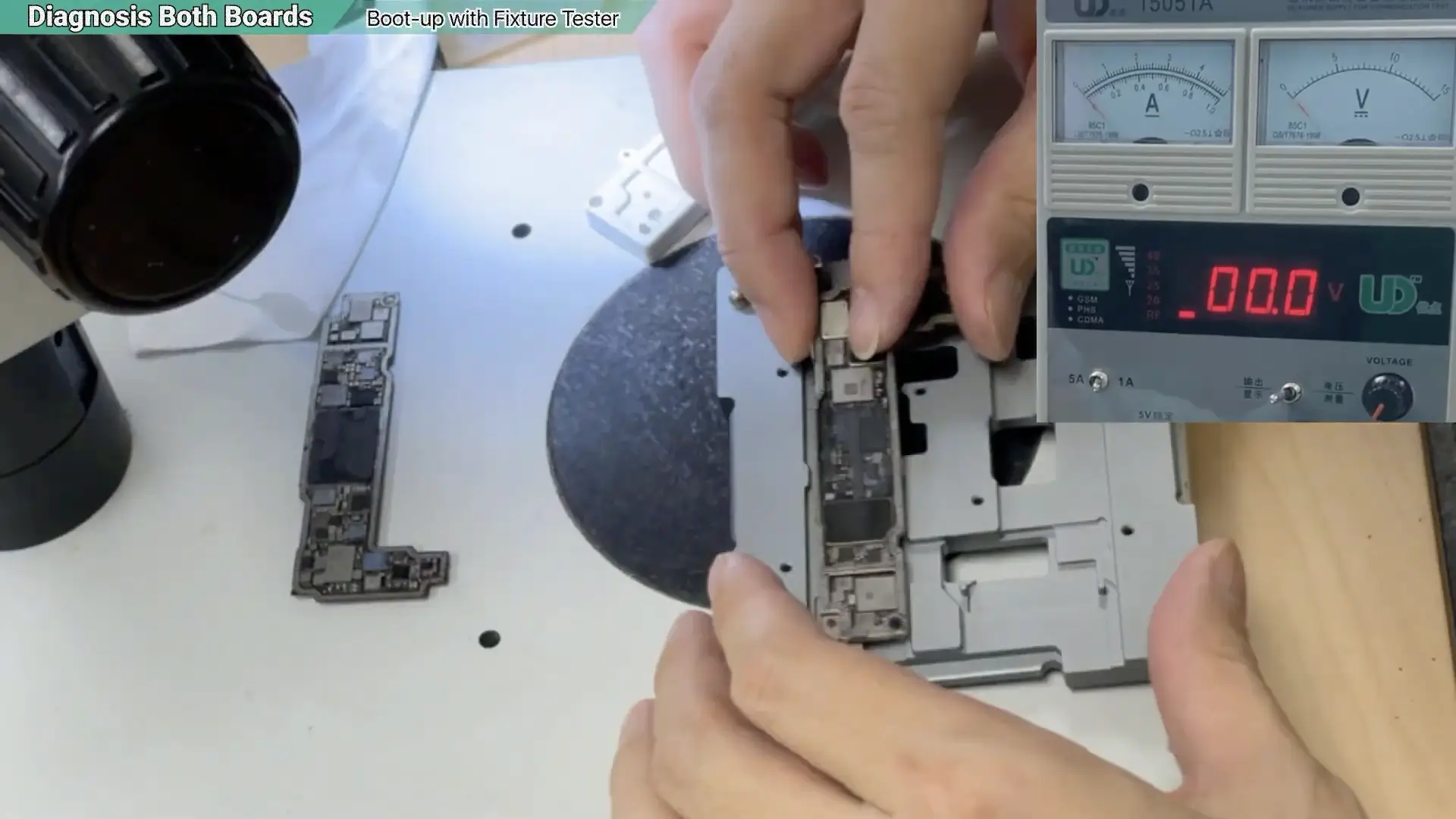
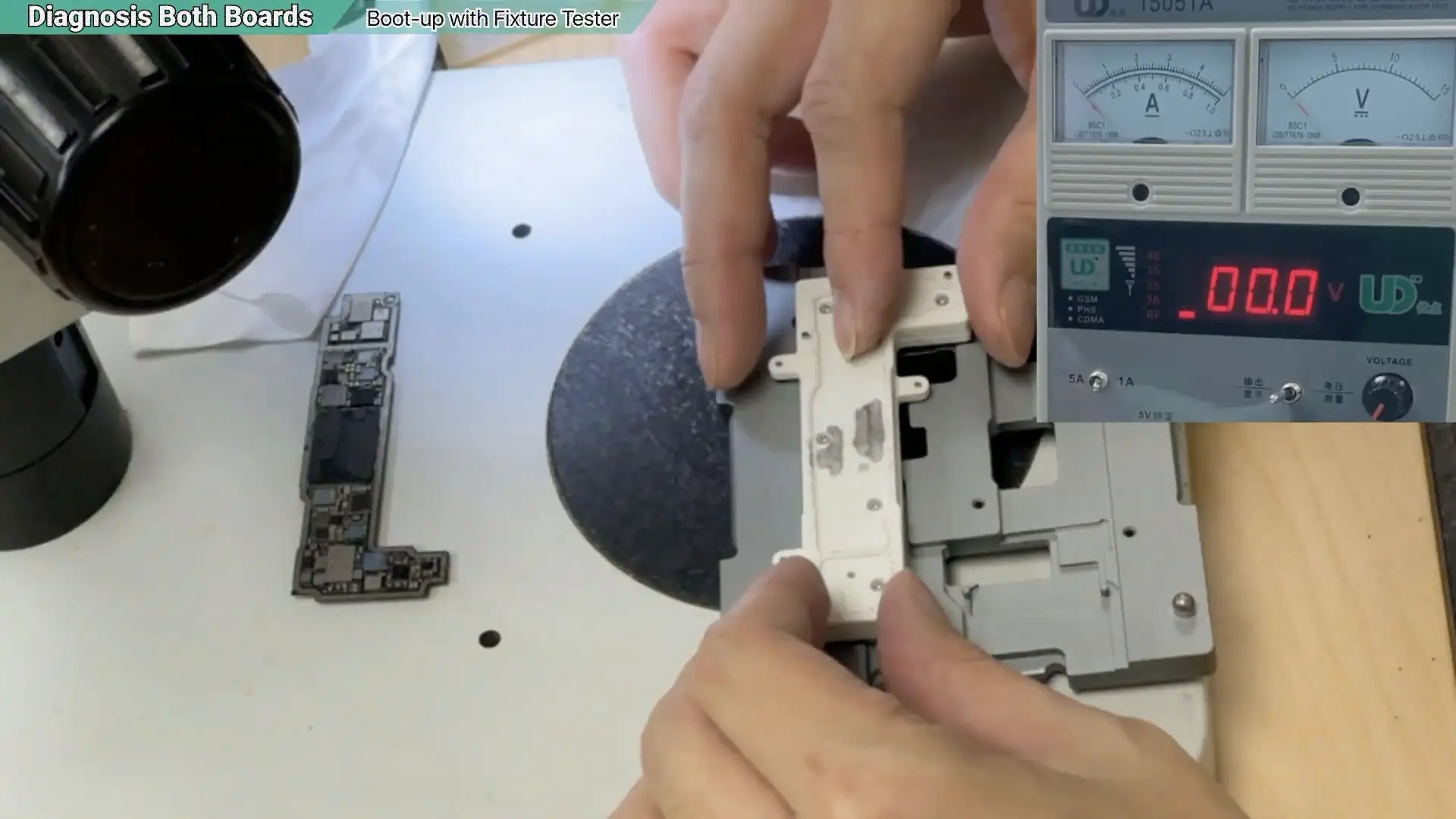
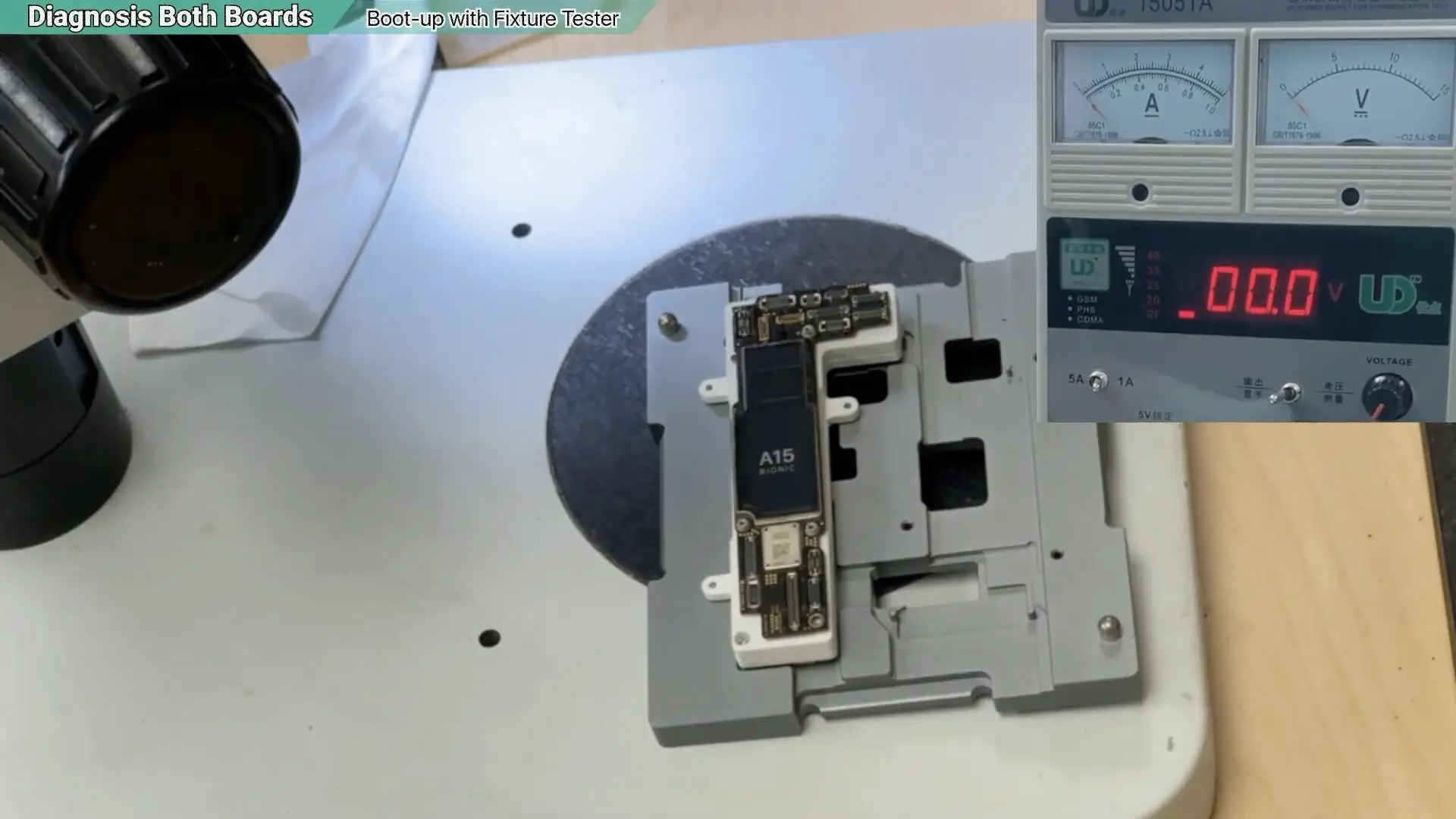
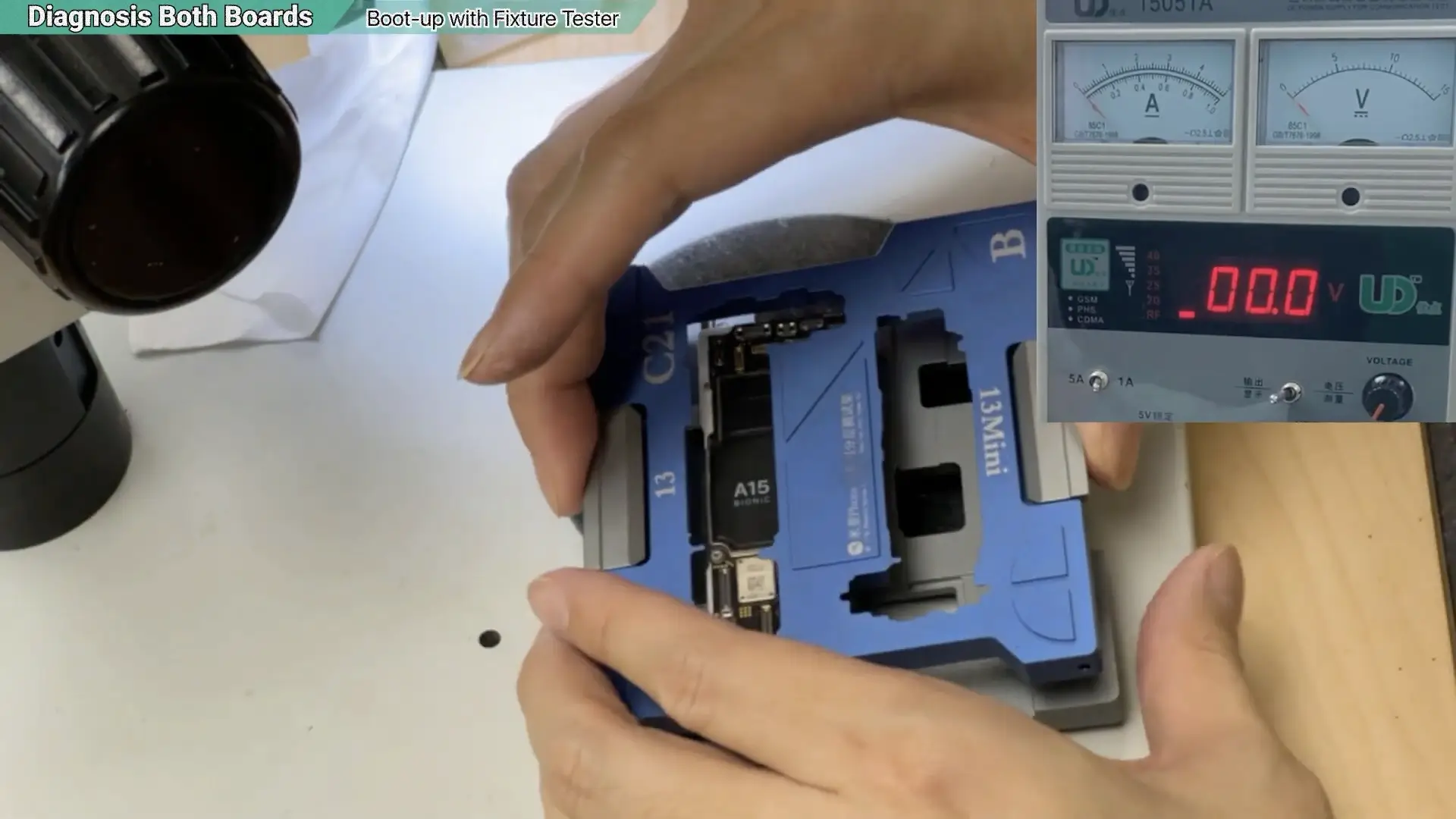
In this repair case, the test confirmed that both boards were functioning correctly. The actual fault was poor solder connections between the two motherboard layers.
This meant only a sandwich board reball was required, without unnecessary repairs to other parts of the motherboard.
Identifying the Root Cause
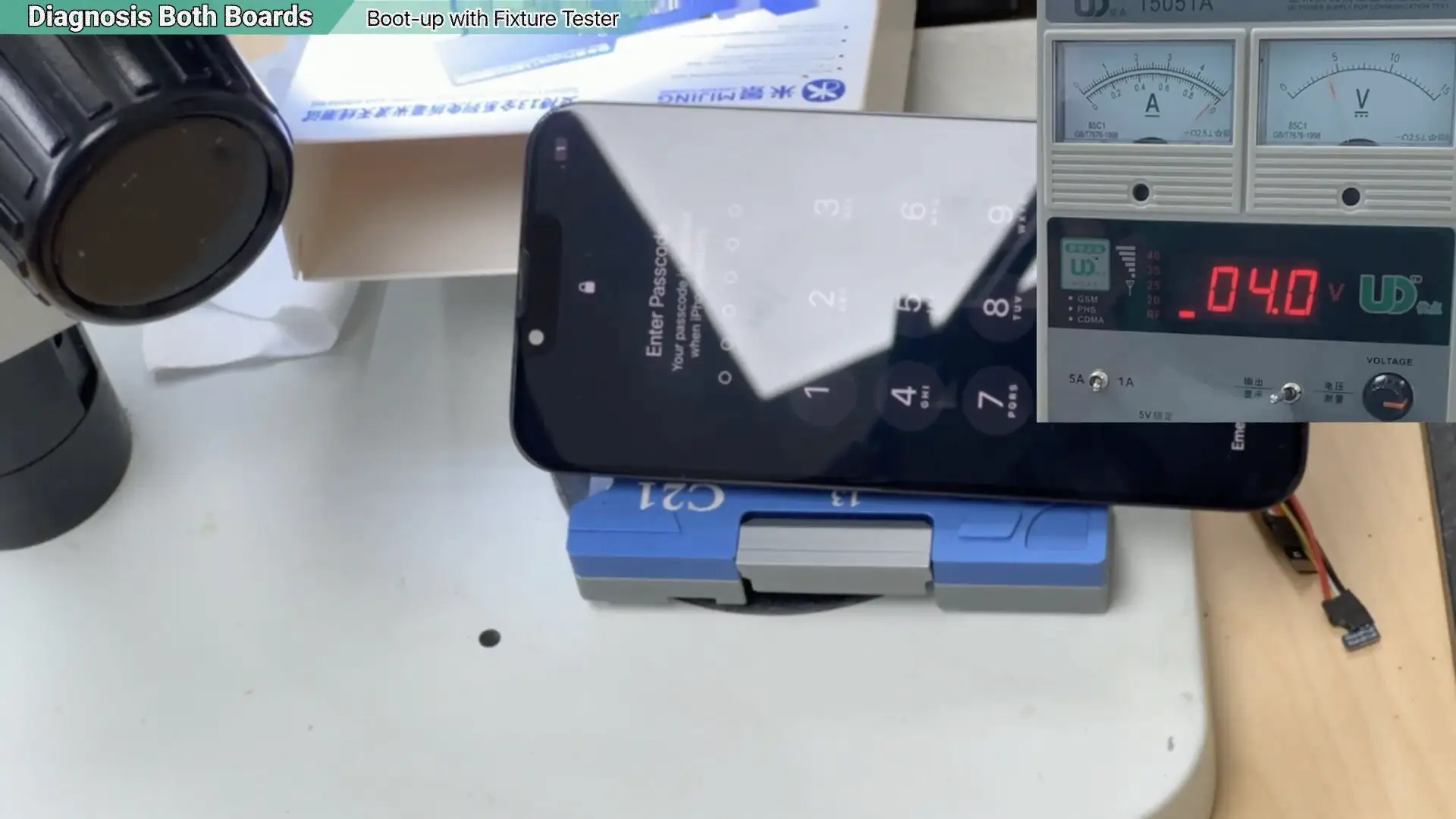
After completing the diagnostic process, the cause of the no power issue became much clearer.
There were no signs of liquid damage, burnt components, or other visible defects on the motherboard. Testing also confirmed that the fault was not caused by the battery, charging port, or other external components.
By testing the separated motherboard with a specialised sandwich board fixture, we confirmed that the problem was caused by poor solder connections between the two layers of the motherboard.
Because the underlying components were functioning correctly, the repair only required restoring the solder connections between the motherboard layers. A complete motherboard replacement was not necessary.
The Repair
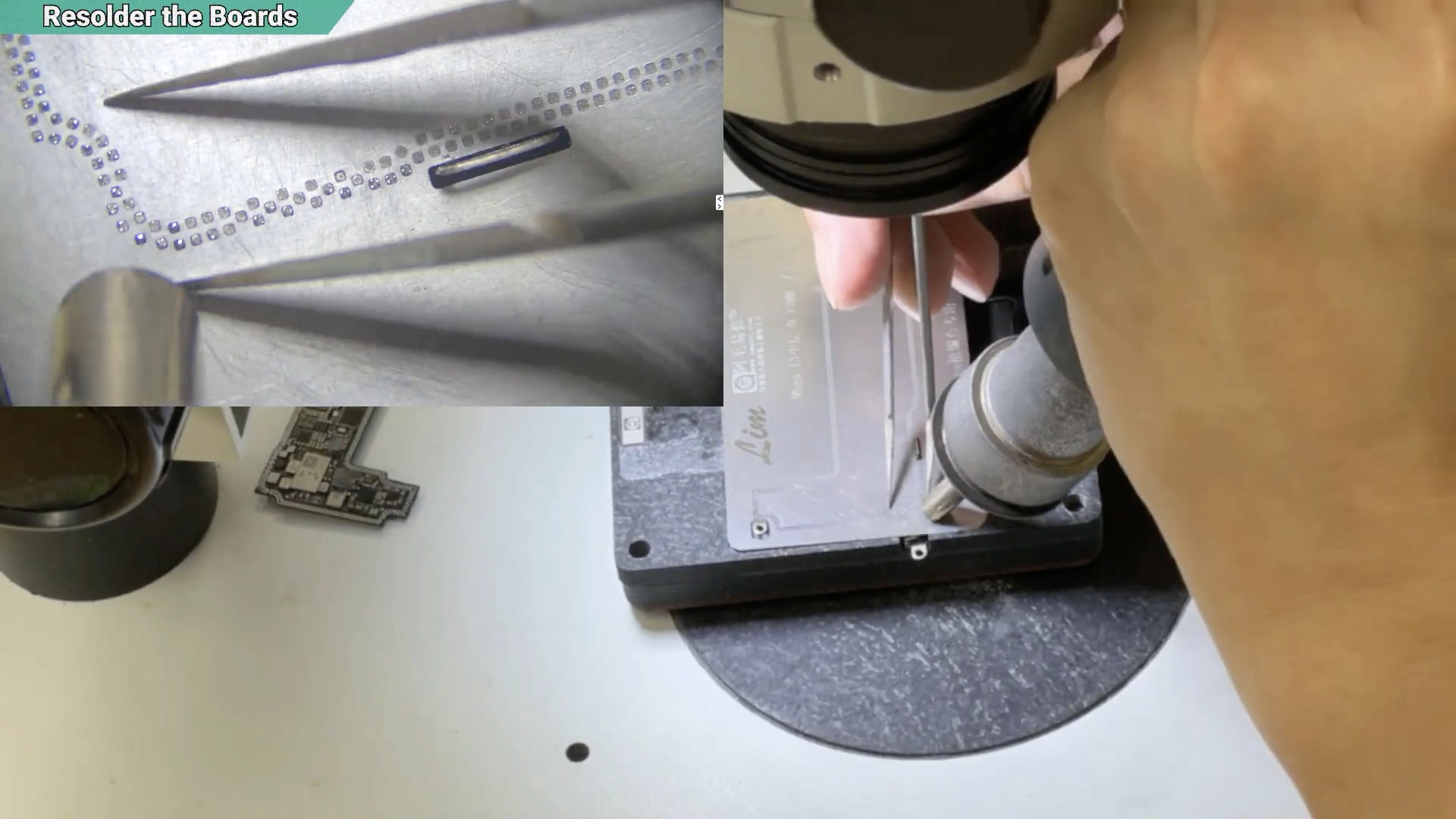
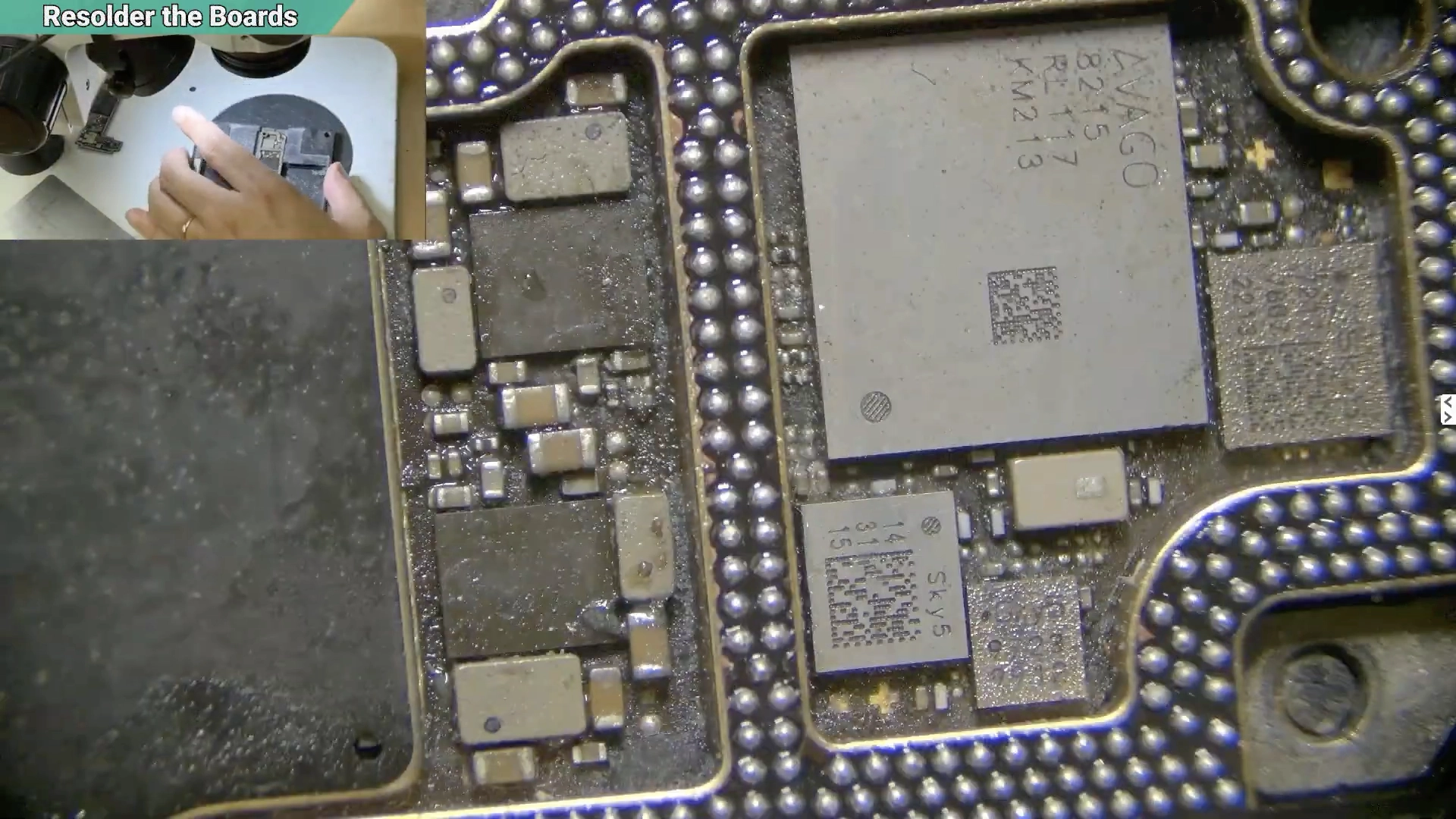
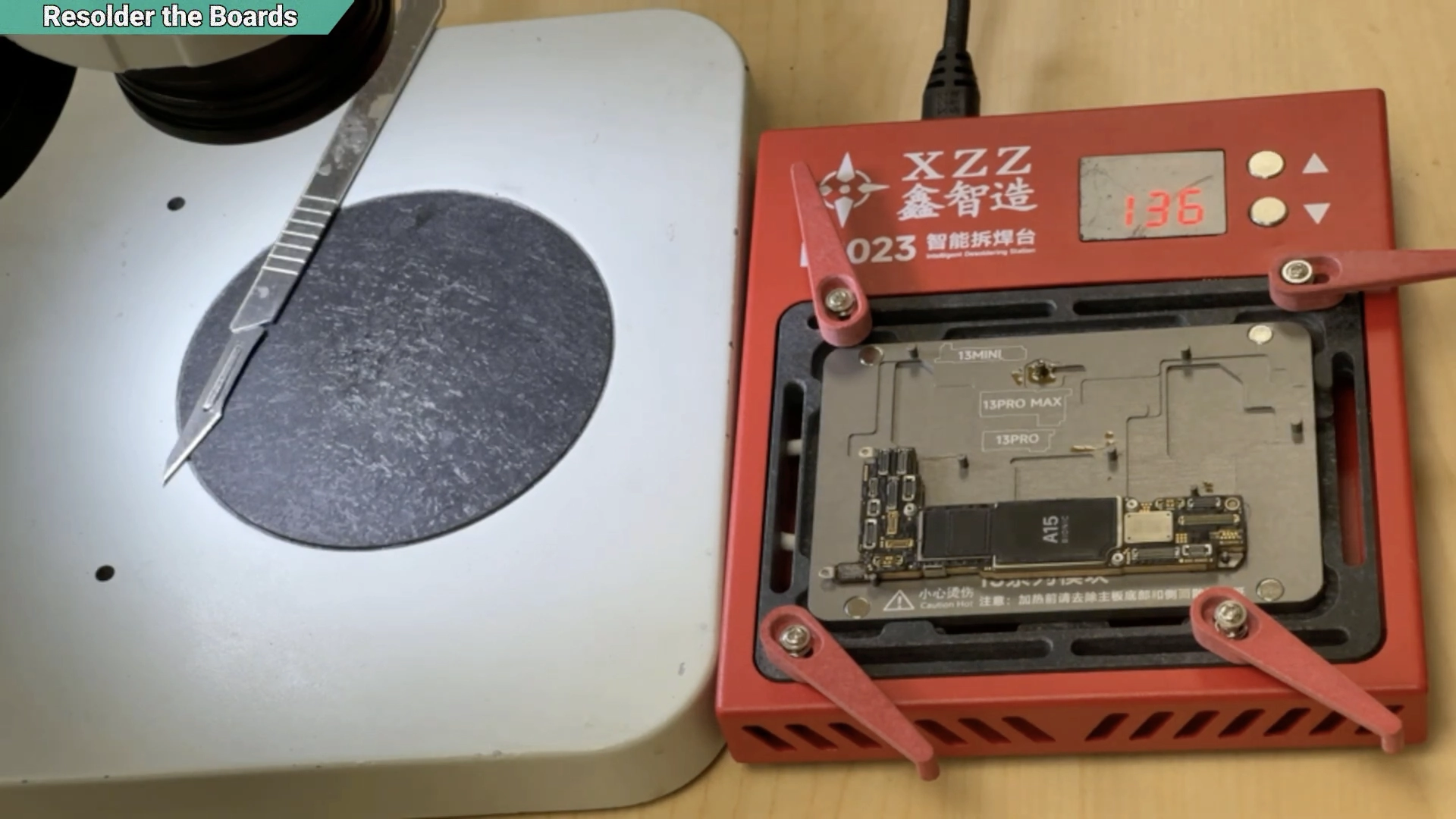
Once the diagnosis was confirmed, only a sandwich board reball was required to restore the solder connections between the two motherboard layers.
Reassembling an iPhone sandwich motherboard involves far more than simply soldering the two boards together. To restore a reliable connection, the process requires precise temperature control, carefully selected solder materials, and appropriate flux designed for microsoldering work. These details help ensure the repaired motherboard performs as intended after reassembly.
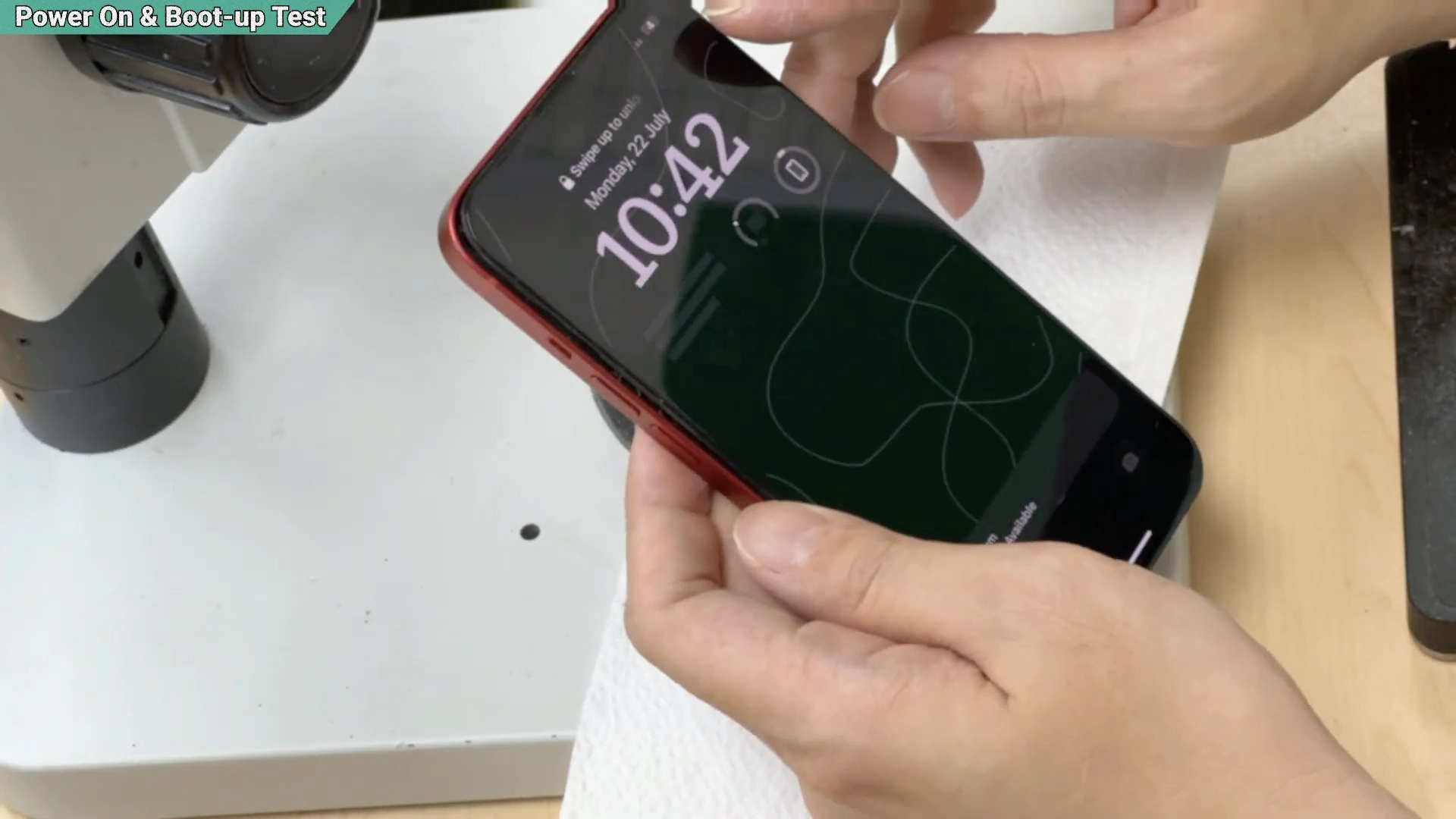
After the motherboard was reassembled, the iPhone 13 powered on normally and passed functional testing, confirming that the original motherboard had been successfully repaired.
To complete the repair, a new water resistance adhesive seal was installed before the device was reassembled. While no repair can restore the iPhone’s original factory water resistance rating, replacing the seal helps maintain proper assembly.
We also provide a 90-day warranty for the repaired motherboard, giving customers added confidence in the repair.
Watch the Complete Diagnosis and Repair
Understanding how a motherboard fault is diagnosed can be difficult from photos alone. To provide complete transparency, we recorded the entire repair process for this iPhone 13.
In the video below, you’ll see the same diagnostic workflow described in this article, including the current response analysis, sandwich motherboard separation, detailed inspection, specialised testing, and the final repair that restored the iPhone to normal operation.
Frequently Asked Questions
Can an iPhone 13 Motherboard Be Repaired?
Yes. Approximately 98% of the iPhone motherboard faults we receive can be repaired. In most of these cases, the customer’s data remains intact because the original motherboard is repaired rather than replaced.
If your priority is recovering important photos, videos, or other personal data, the repair approach may differ from a standard motherboard repair. Data recovery requires additional precautions and a more conservative repair strategy.
If you require data recovery, please contact us before sending in your device so we can advise on the most appropriate approach.
Does an iPhone 13 Motherboard Always Need to Be Replaced?
No. In many cases, the original motherboard can be repaired. This repair case is an example where the issue was resolved by repairing the original motherboard, making a replacement unnecessary.
My iPhone 13 Won't Turn On. Is It Definitely a Motherboard Problem?
Not necessarily. A no power symptom can also be caused by a faulty battery, charging port, or other hardware issues. Proper diagnosis is required to identify the actual cause before recommending a repair.
How Much Does iPhone 13 Motherboard Repair Cost?
The repair cost depends on the fault found during diagnosis. Before you send us your iPhone, we can usually provide an estimated repair cost range based on the symptoms, repair history, and any relevant information you provide.
The initial inspection is free. However, if you decide not to proceed with the repair after diagnosis, a RM30 diagnostic fee applies for iPhones.
If you proceed with the repair, the diagnostic fee is fully waived.
How Long Does It Take to Diagnose an iPhone 13 Motherboard Problem?
Diagnosing an iPhone 13 with a no power or motherboard-related problem typically takes 1 to 2 working days. This allows us to carry out a systematic diagnosis to identify the root cause before recommending any repair.
Once the diagnosis is complete, we will explain the fault, provide a repair quotation, and estimate the turnaround time if you decide to proceed.
How Long Does an iPhone 13 Motherboard Repair Take?
Once you approve the repair, most iPhone 13 motherboard repairs are completed within 3 to 7 working days.
The actual repair time depends on the complexity of the fault and whether the motherboard has been previously repaired or unsuccessfully attempted elsewhere. Motherboards that have not been previously worked on are generally faster to repair.
Do You Provide a Warranty for iPhone 13 Motherboard Repairs?
Yes. We provide a 90-day warranty for the repaired motherboard. Every repaired device is also fitted with a new water resistance adhesive seal during reassembly. However, as with any device that has been opened, the original factory water resistance rating cannot be guaranteed.
Why Can't Apple Repair the Motherboard but You Can?
Apple and Apple Authorised Service Providers generally do not perform component-level motherboard repairs. Instead, when a logic board fault is confirmed, the standard solution is to replace the entire logic board.
At iPhone Service Malaysia, we specialise in component-level motherboard repair (microsoldering). By diagnosing and repairing the faulty area on the original motherboard, it is often possible to restore the device without replacing the entire board.
Whether a motherboard can be repaired depends on the specific fault and the condition of the device. A professional diagnosis is always required before recommending the most suitable solution.
Whether your iPhone won’t turn on, is stuck on the Apple logo, has charging problems, or has been diagnosed with a motherboard fault, we begin every repair with a professional diagnosis to identify the actual cause.
In many cases, the original logic board can be repaired, helping preserve your data and avoid unnecessary motherboard replacement.